
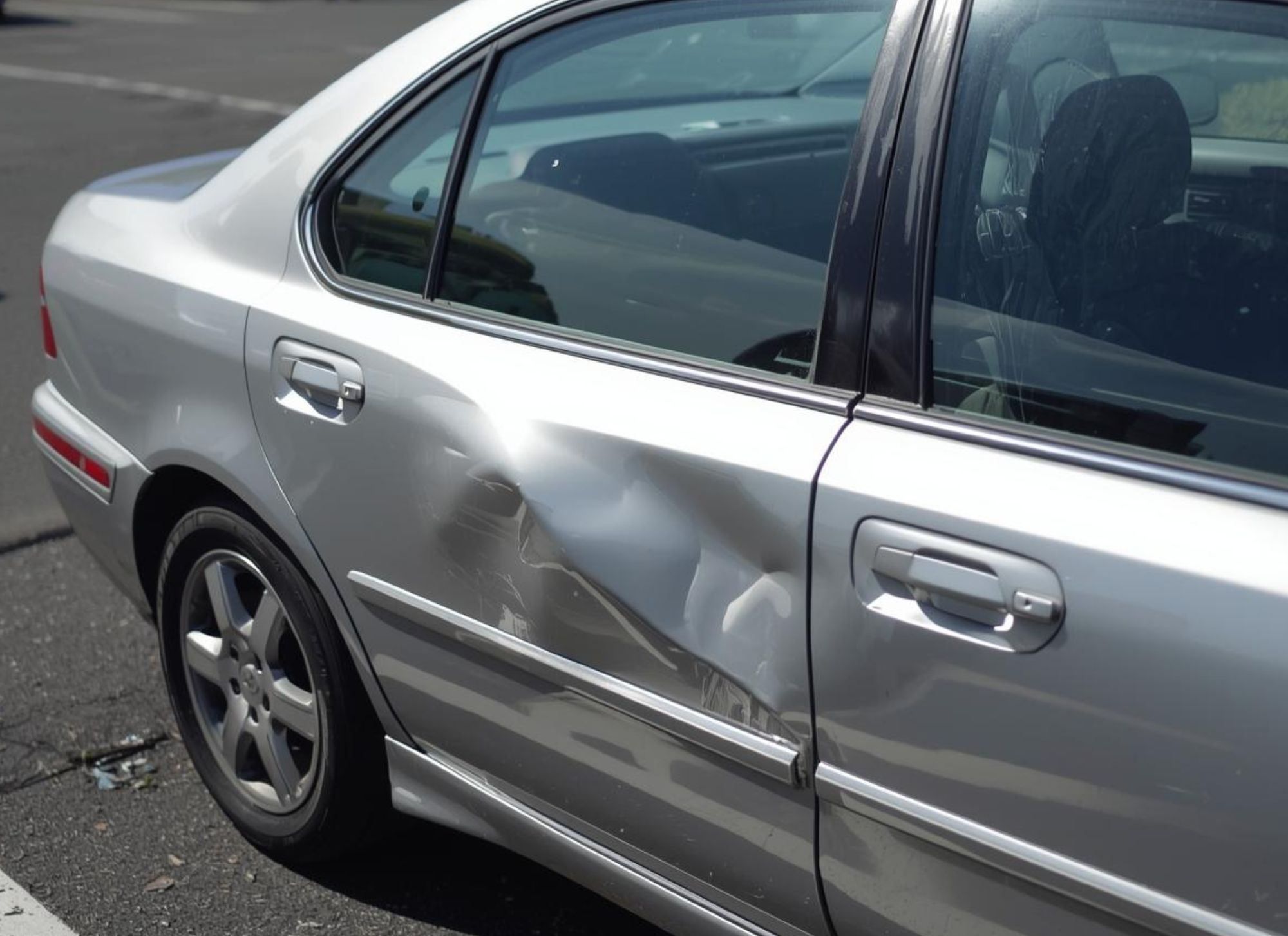
You’re losing money right now. Every day that small dent sits on your car’s door panel, it’s silently draining your vehicle’s value, compromising safety systems you depend on, and breeding rust that’s spreading beneath the surface like a hidden infection.
Most drivers think a minor dent from a runaway shopping cart or careless door swing is just an eyesore—something to fix “when you get around to it.” But here’s what the auto body industry doesn’t advertise: that innocent-looking ding is a ticking time bomb that could cost you 20 times more to fix in six months than it would today.
In this guide, you’ll discover:
- Why ignoring small dents can trigger a $10,000+ repair cascade
- The invisible corrosion process happening right now under your car’s paint
- How modern vehicle technology makes even minor damage a safety liability
- Proven strategies to protect your car’s value and avoid expensive surprises
- The exact timeline for when minor damage becomes catastrophic
The Silent Wealth Drain: Understanding the Real Cost of Car Dents
Why Small Dents Create Outsized Financial Damage
When you spot that first door ding in a parking lot, your brain does a quick calculation: “It’s tiny, it doesn’t hurt anything, I’ll deal with it later.” This seemingly rational decision is costing American drivers over $15 billion annually in preventable repair expenses.
Here’s the financial reality that catches most car owners off-guard. Auto body repair costs have surged dramatically, with labor rates climbing 28% since 2022 and parts availability issues driving prices even higher. What once cost $75 to fix now starts at $150—and that’s only if you catch it early.
The Escalation Timeline (2026 Pricing):
Week 1: Minor dent repair via paintless dent removal: $50-$175 Month 3: Same dent with early corrosion signs: $300-$600 Month 6: Rust remediation with panel repair: $800-$1,500 Year 1: Panel replacement with paint matching: $2,000-$3,500 Year 2+: Structural damage with multiple panel involvement: $4,000-$12,000
The progression isn’t linear—it’s exponential. Each month you delay multiplies both the scope of damage and the complexity of repairs needed.
The Corrosion Time Bomb: Why Rust Starts Before You Can See It
How Modern Car Paint Actually Works (And Fails)
Your car’s exterior isn’t just paint slapped on metal. It’s an engineered barrier system consisting of phosphate coating, electro-coat primer, surfacer, basecoat, and clearcoat—five distinct layers working together to prevent oxidation.
When impact creates a dent, even without visible scratching, the flex and compression crack these layers at a microscopic level. Think of it like dropping a smartphone face-down: the screen might look fine, but internal fractures have already formed.
The Hidden Corrosion Process:
Stage 1 (Days 1-30): Microscopic cracks form in clearcoat and paint layers. Water penetration begins, but remains invisible to the naked eye.
Stage 2 (Months 1-3): Moisture reaches the metal substrate. Oxidation initiates between paint and metal, creating pressure that further separates the coating.
Stage 3 (Months 3-6): Paint begins bubbling or flaking as rust expands underneath. Surface rust becomes visible, but subsurface damage extends far beyond what you can see.
Stage 4 (Months 6-12): Structural rust compromises metal integrity. Holes may form, and rust spreads to adjacent panels through seams and spot welds.
Environmental Accelerators That Speed Up Damage
Geography isn’t just about scenery—it’s a major factor in how quickly dent damage escalates. If you live in coastal regions, your timeline compresses by approximately 40%. Salt air is extraordinarily corrosive, turning a six-month degradation cycle into eight weeks.
Northern states that use road salt face similar acceleration during winter months. A single dent sustained in November can show significant rust by March if left unaddressed. The freeze-thaw cycle compounds the problem as water trapped in paint cracks expands when frozen, widening the gaps and allowing deeper penetration.
Urban environments present their own challenges. Industrial pollutants, acid rain, and higher humidity all contribute to faster oxidation rates compared to rural areas.
The Safety Factor: When Cosmetic Damage Becomes a Crash Risk
How Vehicle Engineering Has Changed the Dent Equation
Twenty years ago, a door dent was truly just cosmetic. Cars were built like tanks—heavy steel frames that could take a beating without affecting structural performance. Today’s vehicles are completely different animals.
Modern cars are designed with strategic crumple zones, impact distribution channels, and precisely calculated weak points that direct collision forces away from passengers. This sophisticated engineering saves lives, but it also means that even minor impacts can disrupt these carefully calibrated systems.
Critical Safety Systems at Risk:
Advanced Driver Assistance Systems (ADAS): That dent near your rear bumper? It might have knocked your backup camera or parking sensor off its calibration point. These systems rely on millimeter-precise positioning. Even small shifts can create blind spots or false warnings that drivers learn to ignore—until they actually need the system in an emergency.
Crumple Zone Integrity: Dents in specific areas (particularly around wheel wells, door frames, and quarter panels) can pre-weaken crumple zones. In a subsequent accident, these compromised areas may fold incorrectly, directing impact forces into the passenger compartment instead of away from it.
Unibody Stress Points: Unlike old body-on-frame vehicles, modern unibody construction distributes stress across the entire structure. A dent indicates metal has been stretched and compressed, potentially creating stress risers that propagate cracks during normal driving vibration.
The Invisible Damage You’re Driving On
Here’s what keeps auto body professionals up at night: door dents rarely exist in isolation. The same impact that created that visible dimple likely transmitted force through the door structure into the B-pillar, rocker panel, or door hinges.
These secondary stress zones won’t show visible damage, but they’ve been compromised nonetheless. Metallurgists call this “work hardening”—the metal has been deformed beyond its elastic limit and won’t return to its original properties.
Over time, these stressed areas can lead to door misalignment (ever notice your door is harder to close than it used to be?), window seal failures, and even structural cracks that develop during normal use.
The Psychology Trap: Why One Dent Multiplies Into Many
Understanding the Broken Window Effect in Automotive Care
Yale University researchers studying urban decay discovered something fascinating: a single broken window in a building leads to more vandalism, more broken windows, and accelerated deterioration. The same psychological principle applies to how we treat our vehicles.
When your car is pristine, you park carefully, avoid tight spaces, and cringe at every door ding. But once that first dent appears and you don’t immediately fix it, something shifts in your brain. The second dent doesn’t sting as much. The third barely registers.
The Psychological Decay Cycle:
Denial Phase: “It’s so small, nobody will notice” Rationalization Phase: “I’ll fix them all at once when I have more time” Acceptance Phase: “It’s just transportation, who cares how it looks” Consequence Phase: Trade-in value drops $2,000-$5,000 below market average
This isn’t about being a bad car owner—it’s about how human brains process loss and damage. Once we’ve accepted an initial loss (the first dent), subsequent losses of the same type feel less painful, even when they’re objectively making the situation worse.
The Maintenance Cascade Effect
The damage pattern extends beyond just collecting more dents. Studies of vehicle maintenance behavior show that owners who defer cosmetic repairs are 3.2 times more likely to also defer mechanical maintenance.
Why? Because the cosmetic damage creates a psychological separation between the owner and the vehicle. Instead of “my car” it becomes “this beater I’m driving.” That emotional disconnect translates into reduced investment in maintenance, which accelerates mechanical deterioration.
Dollar Signs and Depreciation: The True Financial Impact
How Dents Destroy Resale Value Faster Than Mileage
Ask most car owners what hurts resale value most, and they’ll say mileage. They’re wrong. Kelly Blue Book data from 2025 reveals that visible body damage impacts trade-in offers more severely than 30,000 extra miles on the odometer.
The Resale Value Impact Analysis:
A vehicle in “excellent” condition versus “good” condition (the primary difference being cosmetic damage) shows a 15-22% value gap across all vehicle classes. For a $25,000 car, that’s $3,750-$5,500 in lost equity.
But here’s where it gets worse: buyers use visible damage as a negotiation hammer for issues completely unrelated to the dents. That door ding becomes “evidence” that you didn’t maintain the vehicle, justifying lowball offers that extend far beyond the actual repair cost.
Private Sale vs. Trade-In Damage:
Private Sale: Buyers have emotional reactions to cosmetic damage. Even if they plan to repair it, seeing dents triggers subconscious devaluation. Expect 10-15% under market value for minor damage, 20-30% for moderate damage.
Trade-In: Dealers use dents as objective justification for wholesale pricing. They’ll quote the cost to repair (inflated) and subtract it from their offer, then reduce further for “reconditioning” expenses. You’ll typically receive 25-40% under clean title value.
Auction: Wholesale buyers at auction are the harshest. Any visible damage drops vehicles into “rough” category, which can mean 40-60% of clean retail value.
The Compounding Cost Calculator
Let’s walk through a real-world scenario with 2026 pricing:
Year 1: Shopping cart dent appears on driver’s door
- Immediate PDR cost: $125
- Owner delays
Year 2: Rust begins showing through paint
- Rust repair + paint matching: $850
- Owner continues to delay
Year 3: Rust spreads to rocker panel, door hinges affected
- Panel replacement + rust remediation: $2,400
- Owner finally takes action
Total cost: $2,400 (19x the original repair cost) Resale value impact: Additional $3,000 reduction in trade-in offer True total impact: $5,400
If repaired immediately: $125
Net loss from delay: $5,275
Paintless Dent Repair: The Technology That Changes Everything
Why PDR Has Revolutionized Minor Damage Economics
Ten years ago, any dent meant repainting—a process that could take days and cost hundreds or thousands. Paintless Dent Repair has completely transformed this equation, but most car owners still don’t understand what it is or when it works.
PDR technicians use specialized tools to access the back side of dented panels and massage the metal back to its original shape. No grinding, no filler, no paint—just patient manipulation of the metal using leverage and technique.
What Makes PDR Possible:
Modern automotive paint has more flex than older lacquers and enamels. As long as the paint hasn’t cracked, it will return to shape along with the metal. This means dents can be removed while preserving factory finish—which matters tremendously for vehicle value.
The PDR Eligibility Criteria:
✓ Dent is smaller than 3-4 inches in diameter ✓ Paint is intact without cracks or chips ✓ Damage occurred on a body panel (not on a body line or edge) ✓ Technician can access the back of the panel ✓ Metal hasn’t been stretched beyond its elastic limit
When PDR Won’t Work:
✗ Paint is cracked or chipped ✗ Dent is on a sharp body line or panel edge ✗ Previous body filler has been applied ✗ Metal shows signs of work hardening or extreme deformation ✗ Aluminum panels on some luxury vehicles
The Time and Money Advantage
Traditional bodywork timeline:
- Drop off vehicle: Day 1
- Paint ordering and prep: Days 2-3
- Sanding, filling, priming: Days 4-5
- Paint application and curing: Days 6-7
- Final buffing and quality check: Day 8
- Cost: $800-$2,500
PDR timeline:
- Drop off vehicle: Morning
- Repair completed: Same afternoon
- Cost: $75-$400
The speed advantage means you’re not paying for rental cars, dealing with insurance paperwork, or going without your vehicle for a week. For many busy professionals, the convenience factor alone justifies choosing PDR-eligible repairs.
Prevention Strategies: Protecting Your Investment Before Damage Occurs
High-Risk Scenarios Every Driver Should Recognize
Not all parking spots are created equal. Understanding where dents most commonly occur helps you make smarter choices that prevent damage before it happens.
The Most Dangerous Parking Locations:
1. Next to Shopping Cart Corrals (57% higher dent risk) Wind catches carts and sends them rolling into adjacent vehicles. Employees collecting carts also create impact risks as they push long lines of carts past your car.
2. Compact Spaces in Crowded Lots (43% higher risk) When people are squeezing into tight spots, doors get flung open without regard for adjacent vehicles. End spaces near building entrances see the highest door ding rates.
3. Under Trees During Storm Season (38% higher risk for hail damage) While not strictly dents from impact, hail damage is one of the costliest forms of vehicle damage. Trees don’t protect from hail—they drop branches.
4. Parking Structure Bottom Floors (31% higher risk) These high-traffic areas see the most careless parking behavior, impatient drivers, and distracted people rushing to their cars.
5. Near Dumpsters or Loading Zones (29% higher risk) Commercial activity means trucks, carts, and employees making multiple trips with equipment that can impact your vehicle.
Proactive Protection Technologies for 2026
Vehicle protection has evolved beyond cheap plastic door edge guards. Modern solutions integrate with vehicle systems and provide real-time protection.
Smart Protection Systems:
Parking Surveillance Cameras: 360-degree dash cams that activate when they detect motion or impact while parked. Models from Garmin and BlackVue record incidents and provide evidence for insurance claims.
Proximity Alert Systems: Aftermarket sensors that emit warning sounds when people or objects approach your parked vehicle within customizable distance thresholds.
Self-Healing Paint Protection Film: Clear urethane films that can heal minor scratches and impacts with heat. Premium options from XPEL and 3M provide significant impact resistance for high-risk areas like door edges and bumpers.
Ceramic Coating with Impact Resistance: Not just for shine—modern ceramic coatings add a sacrificial layer that absorbs minor impacts before they reach factory paint.
The 48-Hour Response Protocol: When Quick Action Saves Thousands
Why Timing Matters More Than You Think
Auto body professionals have developed what they call the “48-Hour Rule,” but most consumers have never heard of it. Here’s the principle: damage assessment and repair planning must begin within 48 hours of impact to prevent secondary damage cascades.
The Critical First 48 Hours:
Hour 0-2: Take clear photos from multiple angles in good lighting. Photograph the overall area, close-ups of the damage, and any damage to adjacent vehicles or property. This documentation protects you legally and provides baseline information for repair assessment.
Hour 2-12: Assess whether paint has been compromised. Look for any cracks, chips, or areas where primer or metal is visible. Even tiny paint chips need immediate attention to prevent rust.
Hour 12-24: If paint is damaged, apply temporary protection. Automotive touch-up paint or even clear nail polish can serve as a temporary moisture barrier until professional repair.
Hour 24-48: Obtain professional assessment. Many PDR specialists offer free estimates. Even if you decide to delay repair, professional documentation of damage extent protects you from escalation that insurance companies might later claim was pre-existing.
Red Flag Indicators That Demand Immediate Attention
Not all dents are equal. Certain damage patterns indicate underlying problems that worsen rapidly if not addressed.
Emergency Repair Triggers:
⚠ Damage Near Fuel System Components: Dents around fuel doors, rear quarter panels near the tank, or fuel line areas could indicate compromised fuel system integrity. Leaking fuel is both a fire hazard and an environmental contamination issue.
⚠ Impact Affecting Door Operation: If doors stick, won’t close properly, or require unusual force to latch, the impact has affected structural alignment. This isn’t cosmetic—it’s a safety issue that affects crash protection.
⚠ Sensor or Camera Misalignment: Modern safety systems like blind-spot monitoring, lane departure warning, and parking assistance depend on precise sensor positioning. Even small dents in these areas can create dangerous false readings.
⚠ Visible Paint Separation or Bubbling: This indicates that corrosion has already begun underneath the paint. What you see on the surface is only 10-20% of the actual damage extent.
⚠ Dents Accompanied by Unusual Sounds: If you hear rattling, squeaking, or rubbing sounds that weren’t present before impact, internal components have been damaged or displaced.
Insurance Navigation: Maximizing Coverage Without Raising Rates
The Cosmetic Damage Coverage Blind Spot
Here’s a secret that insurance companies don’t advertise: many comprehensive policies include specific cosmetic damage provisions that don’t affect your rates or deductibles. These riders were designed for minor damage that doesn’t affect vehicle operation but does impact value.
Cosmetic Coverage Variations by Provider:
State Farm: Offers “Appearance Care” as an add-on that covers paint chips, minor dents, and interior damage up to $1,000 per year with no deductible.
Progressive: Includes “Custom Parts and Equipment” coverage that can extend to cosmetic protection products like PPF and ceramic coatings.
Geico: Provides mechanical breakdown insurance that sometimes includes cosmetic damage from covered mechanical failures.
USAA: Offers “Car Replacement Assistance” which includes cosmetic damage protection for newer vehicles.
The Deductible Decision Matrix
Comprehensive insurance deductibles typically range from $250-$1,000. Understanding when to file claims versus paying out-of-pocket requires strategic thinking.
When to Use Insurance:
- Damage exceeds 150% of your deductible (accounts for rate increase risk)
- Multiple panels affected, suggesting damage over $1,500
- Structural damage that affects safety systems
- Damage occurred during a covered incident (storm, vandalism, collision)
When to Pay Out of Pocket:
- Repair cost is less than or close to deductible amount
- You’ve filed claims recently (multiple claims = rate increases)
- Damage is easily PDR-eligible and under $400
- You’re approaching policy renewal and want to maintain clean record
The CLUE Report Reality
Every insurance claim you file goes into a national database called CLUE (Comprehensive Loss Underwriting Exchange). Future insurance companies review this when calculating your rates. Multiple cosmetic damage claims signal risk, even if they’re not your fault.
Strategic Claim Management:
Space claims at least 36 months apart when possible. Insurance company algorithms weight recent claims much more heavily than older ones.
Bundle related damage into single claims. If you have multiple dents from a single parking lot incident, one claim is better than several separate claims over time.
Consider the five-year impact. A $600 claim might save you money today but cost $1,200 in higher premiums over the next renewal cycle.
Finding Quality Repair Services: Avoiding the Worst Mistakes
The Certification Credentials That Actually Matter
The auto body repair industry is largely unregulated, meaning anyone can hang a sign and claim to be an expert. Understanding which certifications indicate actual competency protects you from botched repairs that make damage worse.
Legitimate Industry Certifications:
I-CAR Platinum Designation: Inter-Industry Conference on Auto Collision Repair provides the gold standard training. Shops must have 80% of staff members complete ongoing education and show proof of proper equipment.
ASE Certification (Automotive Service Excellence): Individual technician certification that requires passing comprehensive exams and demonstrating hands-on competency.
OEM Certification: Major manufacturers like Tesla, Mercedes, BMW certify shops that meet their standards for equipment, training, and parts usage. Critical for luxury vehicles and those with aluminum body panels.
PDR Manufacturer Training: Companies like Dent Wizard and Paintless Dent Repair Network provide specialized training that goes far beyond YouTube tutorials.
The Estimate Red Flags
Getting multiple estimates isn’t just about price comparison—it’s about spotting unqualified shops that will create more problems than they solve.
Warning Signs in Estimates:
🚩 Significantly cheaper than other quotes (30%+ below average suggests cutting corners) 🚩 Pressure to start immediately without thorough inspection 🚩 Unwillingness to provide written estimates or warranties 🚩 Vague descriptions like “body work” instead of specific repair procedures 🚩 No mention of paint matching or blending processes for painted repairs 🚩 Refusal to work with insurance companies (suggests questionable practices) 🚩 No photographs or documentation of damage extent
Green Flags to Look For:
✅ Detailed repair plan with step-by-step procedures ✅ Specific parts breakdown with OEM vs. aftermarket options ✅ Clear warranty terms covering both parts and labor ✅ Insurance company approval and direct billing options ✅ Portfolio of before/after photos from similar repairs ✅ Willingness to explain the repair process and timeline ✅ Shop tour showing equipment and work quality
The Warranty Question You Must Ask
Never accept repair work without understanding warranty coverage. Quality shops stand behind their work, while questionable operators avoid commitment.
Warranty Standards to Expect:
PDR Work: Lifetime warranty on repair quality (dent won’t reappear if done properly) Paint Work: 3-5 years on paint application and finish Structural Repair: Lifetime warranty on structural integrity Parts: Match OEM warranty terms for replacement components
Get warranties in writing, understand what voids them, and verify the shop will still honor warranties if they change ownership or close.
The Cost-Benefit Analysis: When Repair Doesn’t Make Sense
Strategic Repair Decisions Based on Vehicle Age and Value
Not every dent justifies repair. Understanding the break-even point prevents throwing good money after bad on vehicles approaching end-of-life.
The 10% Rule:
If repair costs exceed 10% of current vehicle value, carefully evaluate whether the investment makes sense. For a $5,000 vehicle, spending $750 on cosmetic repair may not provide sufficient return.
Exception Scenarios:
You plan to keep the vehicle 3+ more years (repair prevents further deterioration) The damage affects safety systems or structural integrity You’re in a lease with return requirements The vehicle has sentimental value beyond market price
The Planned Ownership Timeline Factor
Your intended ownership duration should directly influence repair decisions.
Ownership Scenarios:
Selling Within 6 Months: Repair all visible damage. ROI from increased sale price typically exceeds repair cost by 2-3x for minor damage.
Keeping 1-2 Years: Repair paint damage to prevent rust. Purely cosmetic dents without paint compromise can potentially wait.
Long-Term Ownership (3+ Years): Repair everything immediately. Long ownership means rust and structural damage will have time to develop and spread.
Uncertain Timeline: Err toward repair. Preventing damage escalation keeps options open whether you sell or keep the vehicle.
The Market Condition Variable
Local market dynamics affect whether repairs provide positive ROI. Research recent sales of similar vehicles in your area.
Hot Markets (High Demand, Low Inventory): Buyers may overlook minor cosmetic issues due to limited choices. Repair ROI diminishes.
Cold Markets (Oversupply): Buyers have choices and will use any flaw to negotiate. Repair ROI increases significantly.
Luxury/Premium Segment: Buyers expect perfection. Even minor damage creates disproportionate value loss. Repair always recommended.
Economy/High-Mileage Segment: Buyers expect some wear. Very minor damage may not affect sale price enough to justify repair costs.
Taking Action: Your Comprehensive Damage Management Plan
The 30-Day Vehicle Audit
Before any new damage occurs, establish your vehicle’s current condition baseline. This takes 30 minutes and could save thousands.
Week 1: Visual Inspection Checklist
Walk around your vehicle in bright sunlight and photograph:
- All four sides from 10 feet away
- Close-ups of each panel
- Door edges and jambs
- Bumper covers and trim
- Underbody (use phone camera on stick if needed)
Look specifically for:
- Existing dents or dimples you’ve forgotten about
- Paint chips or scratches
- Areas showing early rust
- Panel gaps that seem uneven
- Areas where paint looks bubbled or raised
Week 2: Professional Assessment
Take your vehicle to a certified body shop for a free estimate on any existing damage. This serves multiple purposes:
- Establishes pre-existing damage for insurance purposes
- Provides baseline cost information
- Identifies hidden issues you missed
- Creates relationship with quality shop for future needs
Week 3: Insurance Review
Pull out your policy documents (or log into your account) and identify:
- Comprehensive deductible amount
- Cosmetic damage coverage if included
- Glass coverage terms
- Rental car provisions
Call your agent and specifically ask: “Does my policy include any provisions for minor cosmetic damage that wouldn’t affect my rates?”
Week 4: Prevention Implementation
Based on your findings, implement appropriate protection:
- Purchase door edge guards for high-risk areas
- Install dash cam with parking mode if you park in public lots
- Apply paint protection film to vulnerable panels
- Change parking habits based on damage risk assessment
The New Damage Response Checklist
When new damage occurs, following this protocol prevents costly mistakes:
☐ Immediate (Within Hours):
- Photograph damage from multiple angles
- Document location, date, time
- Note weather conditions and circumstances
- Identify witnesses if applicable
- File police report if damage was from hit-and-run
☐ Within 24 Hours:
- Contact insurance company if filing claim
- Research PDR specialists in your area
- Check for paint damage that needs temporary protection
- Review dash cam footage if applicable
☐ Within 48 Hours:
- Obtain at least 2 professional estimates
- Make preliminary decision on repair timing
- Apply temporary protection if paint is compromised
- Schedule repair if proceeding immediately
☐ Within One Week:
- Finalize repair decision
- Schedule appointment with chosen shop
- Understand warranty terms
- Arrange rental vehicle if needed
Building Your Automotive Care Network
Don’t wait for damage to find quality professionals. Establish relationships now:
Your Ideal Network Includes:
Certified PDR Specialist: Someone who can handle 80% of minor damage quickly and affordably
Full-Service Body Shop: I-CAR certified shop for major damage and insurance work
Mobile Detailer: Professional who can assess paint condition and identify early corrosion
Insurance Agent: Someone who actually answers the phone and knows your policy details
Automotive Attorney: For situations where damage involves other parties or disputes
Frequently Asked Questions About Car Dent Repair
How much does it typically cost to fix a small dent in 2026?
Small dent repair costs range from $50 to $200 for paintless dent removal (PDR) if the dent is quarter-sized or smaller and paint is intact. Traditional bodywork for the same damage starts around $300-$500. Location matters significantly—dents on flat panels cost less than those on body lines or curved areas. Mobile PDR services may charge 15-20% more for convenience but eliminate shop time.
Can I fix car dents myself with DIY kits?
DIY dent repair kits work for very minor, shallow dents on flat panels where you have nothing to lose. Success rates run about 25-30% for inexperienced users. The risk: DIY attempts can stretch metal beyond repair, crack paint, and eliminate the possibility of professional PDR later. For dents larger than a quarter or on visible areas, professional repair costs less than fixing botched DIY attempts.
How long does paintless dent repair take?
Most PDR repairs are completed in 1-3 hours depending on dent complexity and location. Simple door dings take 30-45 minutes. Multiple dents or hard-to-access areas may require 4-6 hours. Unlike traditional bodywork requiring days for painting and curing, PDR is typically same-day service. Mobile PDR technicians can often complete repairs in your driveway while you work from home.
Will small dents spread or get worse over time?
Yes, in multiple ways. Paint cracks around the dent allow moisture penetration, starting rust that spreads outward. The dented area collects water and contaminants, accelerating corrosion. Metal stress from the dent can propagate micro-fractures during normal vibration. Temperature cycling causes expansion and contraction that gradually enlarges the affected area. A dent left untreated typically doubles its repair cost every 6-8 months.
Does car insurance cover minor dent repair?
Comprehensive insurance covers dents from non-collision causes (hail, falling objects, vandalism) minus your deductible. Collision coverage addresses parking lot damage and accidents. Many policies include cosmetic damage riders with lower or no deductibles for minor damage. Filing claims affects your rates, so cost-benefit analysis is essential. Damage under $500 is often better handled out-of-pocket unless you have specific cosmetic coverage.
How do I know if a dent is too severe for PDR?
PDR works when paint is intact, the dent is on a body panel (not edges or body lines), technicians can access the panel’s backside, and metal hasn’t been stretched beyond elasticity. Paint cracks, creases, or dents larger than a basketball typically require traditional repair. Aluminum panels on luxury vehicles have different elasticity limits. Professional PDR specialists can assess in minutes—most offer free evaluations.
What’s the difference between PDR and traditional dent repair?
PDR manipulates metal from behind using specialized tools, preserving original paint and factory finish. Traditional repair involves grinding, filling, sanding, priming, painting, and clearcoating. PDR takes hours and costs 50-70% less, maintains vehicle value better, and leaves no evidence of repair. Traditional repair is necessary when paint is damaged, dents are too severe, or access to the panel backside is impossible.
How does rust start from a dent if the paint isn’t scratched?
Paint flexes during impact, creating microscopic cracks invisible to the naked eye. These fractures allow moisture to penetrate between paint layers and reach bare metal. Dents create low points where water pools instead of running off. Paint separation from impact pressure allows moisture to spread laterally under intact paint. You’ll see paint bubbling or flaking 3-6 months before realizing subsurface rust has been growing since the dent occurred.
Should I repair dents before selling my car?
Almost always yes. Clean vehicles sell for 15-25% more than identical cars with cosmetic damage. Repair costs typically run $200-$800 for minor damage but increase sale price by $1,500-$3,000. Buyers use visible damage to negotiate on everything, not just the dents. Unrepaired damage signals neglect, making buyers suspicious of hidden mechanical issues. The ROI on pre-sale cosmetic repair averages 3-4x the repair cost.
How much does a dent reduce my car’s value?
A single small dent reduces trade-in value by $300-$750. Multiple dents or larger damage drops value 10-20% below market average. Private sale values decrease 5-15% with visible damage. Luxury vehicles suffer disproportionate value loss—minor damage on a Mercedes or BMW can reduce value by $2,000-$5,000. The psychological impact exceeds the actual repair cost as buyers assume neglect extends to mechanical maintenance.
The Bottom Line: Why Today’s Decision Matters Tomorrow
Every car owner faces the same choice when discovering new damage: deal with it now or postpone until later. The data is unambiguous—postponing minor repairs transforms affordable maintenance into major restoration.
The compounding cost principle means that today’s $150 PDR repair becomes next month’s $400 paint repair, next quarter’s $1,200 panel replacement, and next year’s $3,500 structural repair nightmare. This isn’t theoretical—it’s the documented progression tracked across millions of repair claims.
Beyond the dollars, consider what unrepaired damage signals about your relationship with your vehicle. Transportation represents most people’s second-largest asset after housing. Neglecting its condition doesn’t just drain wealth—it reflects a broader pattern of deferred decision-making that compounds into larger life issues.
The automotive maintenance principle applies universally: small problems addressed immediately remain small. Small problems ignored systematically become catastrophic, expensive emergencies that occur at the worst possible moment.
Your Next Three Actions
1. Inspect Your Vehicle This Week Schedule 30 minutes to thoroughly examine your car for existing damage you’ve been ignoring. Take photos. Get a professional assessment. Knowledge precedes action.
2. Establish Your Repair Network Now Research certified PDR specialists and I-CAR shops in your area before you need them. Read reviews, verify certifications, get preliminary cost information. Emergencies force bad decisions—preparation enables good ones.
3. Review Your Insurance Coverage Today Log into your policy portal or call your agent. Understand exactly what damage is covered, what your deductibles are, and whether cosmetic damage riders are available. This 15-minute conversation could save thousands.
The longest journey begins with a single step. For your vehicle’s health and your financial wellbeing, let that step be acknowledging that minor damage demands major attention.
Your car is more than transportation—it’s a depreciating asset that requires active management to minimize value loss. Treat it accordingly, and it will serve you well while preserving maximum equity for your next vehicle purchase.
Take Action Now: Professional Resources and Next Steps
The difference between car owners who maintain vehicle value and those who watch it evaporate isn’t knowledge—it’s action. You now understand the true cost of dent damage, the corrosion timeline, and the financial impact of delay.
Immediate Action Items:
📸 Document your vehicle’s current condition with comprehensive photos from all angles in natural light. Create a date-stamped digital folder for ongoing condition tracking.
🔍 Schedule free assessments with at least two certified PDR specialists this week. Even if you’re not ready to repair, understanding your baseline cost helps with future decision-making.
📞 Call your insurance agent tomorrow and specifically ask about cosmetic damage coverage provisions. Confirm your comprehensive deductible and whether recent repairs would affect your rates.
💰 Calculate your vehicle’s current market value using Kelly Blue Book, Edmunds, and recent local sales. Understanding the cost-to-value ratio guides repair decisions.
🛡️ Implement one prevention strategy within 72 hours. Whether it’s door edge guards, parking habit changes, or dash cam installation, take concrete action to prevent future damage.
Finding Certified Repair Professionals
Start your search with these resources:
- I-CAR Collision Repair Network: www.i-car.com (search for Gold Class and Platinum shops)
- ASE Certified Shops: www.ase.com (verify individual technician certifications)
- Paintless Dent Repair Network: Local PDR specialists with verified training
- Your Insurance Company’s Approved Network: Pre-vetted shops that direct bill
Don’t let another day pass while that dent spreads rust beneath your car’s paint. The action you take today determines whether you’re looking at a $125 repair or a $3,000 restoration project.
Your vehicle’s condition isn’t about pride—it’s about protecting your investment, ensuring your safety, and maintaining the flexibility to sell on your terms when the time comes.
The choice is yours. Make it count.
About This Guide: This comprehensive resource was developed through analysis of industry repair data, insurance claim statistics, and consultation with certified auto body professionals. Pricing reflects 2026 market conditions and may vary by region. Always obtain professional assessment for specific repair recommendations.
Disclaimer: This article provides general information and should not replace professional mechanical or body repair advice. Repair costs, timelines, and methods vary based on vehicle make, model, damage severity, and geographic location. Consult certified professionals for accurate assessments of your specific situation.