
You’re about to ruin your car’s paint. Not intentionally. Not maliciously. But with the absolute certainty that comes from combining insufficient knowledge, harbor freight equipment, and a YouTube video watched at 1.5x speed while eating lunch.
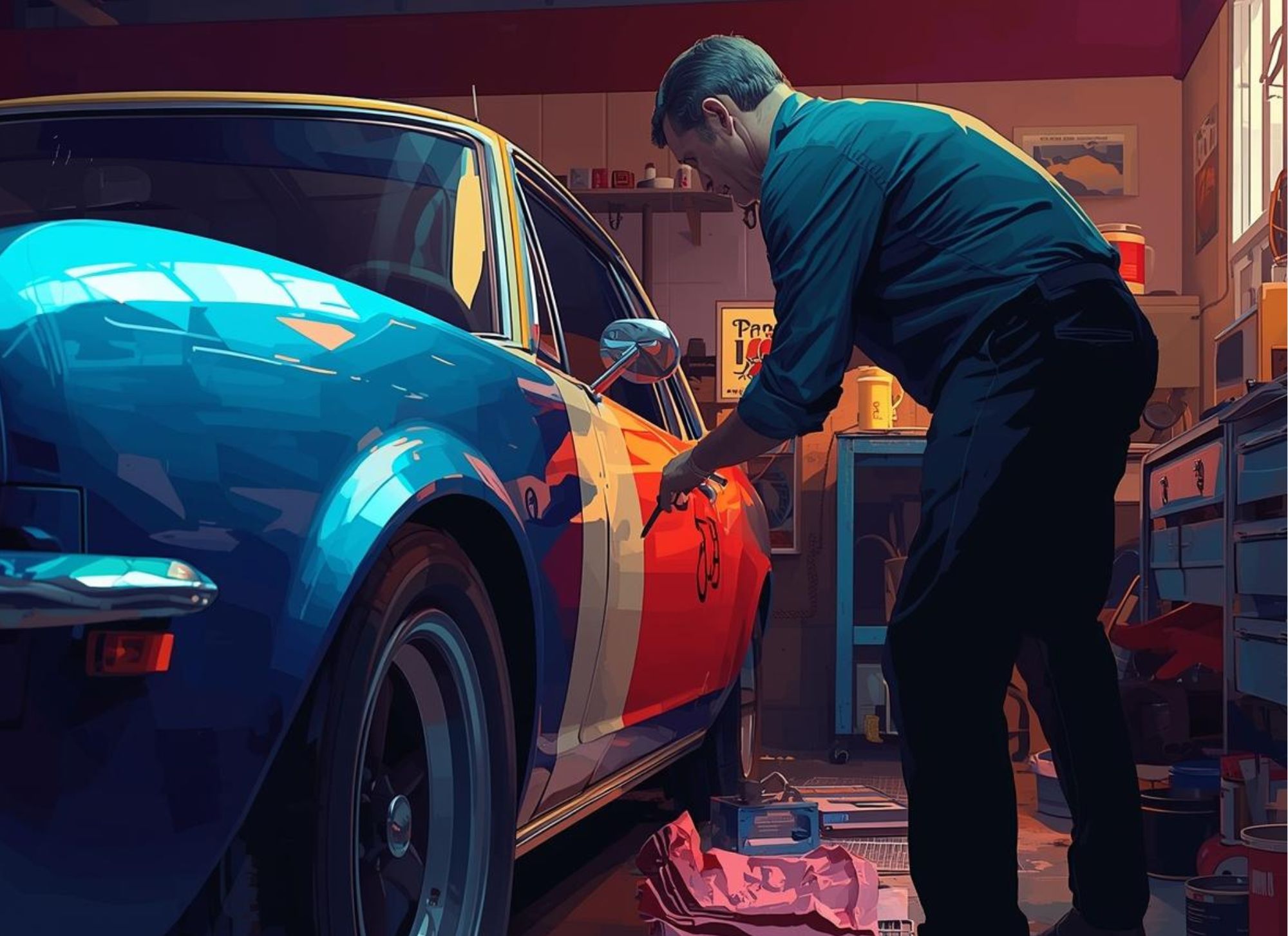
My neighbor learned this the expensive way. He bought a $89 rotary buffer and Meguiars compound from AutoZone. Three hours later, he’d burned through his clear coat in four locations, created holograms across his entire hood, and transformed his metallic blue paint into a cloudy, scratched disaster. Professional correction to fix his “correction”: $2,800. Complete hood repaint when correction wasn’t enough: $1,400. Total cost of his $89 savings attempt: $4,200.
This scenario repeats thousands of times weekly across America. Well-intentioned car owners watch professional detailers achieve miraculous results, buy similar-looking equipment, and discover too late that paint correction isn’t a skill you acquire from 12 minutes of video content—it’s a craft requiring understanding of paint chemistry, physics of abrasion, proper equipment operation, and the experience to recognize when you’re about to destroy something irreversible.
According to industry data from the International Detailing Association, 73% of first-time DIY paint correction attempts result in damage requiring professional remediation costing 2-5x more than the original professional correction would have cost. The 27% who succeed share specific characteristics: proper equipment, systematic education, realistic expectations, and the wisdom to stop before catastrophic damage.
This forensic guide provides:
- The paint chemistry that determines success versus disaster
- Why clear coat thickness is the single critical measurement nobody takes
- The equipment hierarchy: what actually matters versus marketing hype
- The 8-stage professional correction process shops don’t want you understanding
- Compound and polish selection matrix based on actual paint hardness testing
- Machine technique that separates amateurs from professionals
- The cost-benefit decision tree: when DIY makes sense versus professional service
- Damage recognition: identifying the point of no return before you cross it
- Regional climate impacts on paint degradation and protection strategies
- Protection technology evolution: wax vs. sealant vs. ceramic vs. PPF
- The resale value ROI calculation that justifies or negates restoration investment
This isn’t another “buy these products and your car will be perfect” article. This is the technical education that prevents you from becoming the next $4,200 cautionary tale.
The Paint System Architecture: What You’re Actually Working With
The Three-Layer Reality
Modern automotive paint isn’t a single layer—it’s an engineered system:
Layer 1: E-Coat/Primer (20-30 micrometers)
- Function: Corrosion protection, adhesion for subsequent layers
- Composition: Epoxy-based electrocoat
- Vulnerability: Never exposed unless catastrophic damage
- Repairability: Requires complete panel refinishing
Layer 2: Base Coat (20-40 micrometers)
- Function: Color and visual effects (metallic, pearl, etc.)
- Composition: Pigment suspended in resin binder
- Vulnerability: UV exposure causes fading if clear coat fails
- Repairability: Impossible to restore without refinishing
Layer 3: Clear Coat (40-60 micrometers / 1.6-2.4 mils)
- Function: UV protection, gloss, depth, scratch resistance
- Composition: Polyurethane or acrylic polymers with UV stabilizers
- Vulnerability: Direct environmental exposure causes all visible damage
- Repairability: YES—this is what paint correction restores
Critical understanding: Paint correction removes material from clear coat only.
The Micrometer Reality
Clear coat thickness on modern vehicles:
Factory fresh: 50-60 micrometers (2.0-2.4 mils) Safe correction range: 40-55 micrometers (1.6-2.2 mils) Danger zone: 30-40 micrometers (1.2-1.6 mils) Failure imminent: Below 30 micrometers (1.2 mils)
Material removal per correction stage:
Heavy compound: 3-8 micrometers removed Medium polish: 1-3 micrometers removed Fine polish: 0.5-1 micrometer removed
The math that dooms amateurs:
Starting thickness: 55 micrometers
- Amateur attempt #1 (wrong compound): -12 micrometers
- Amateur attempt #2 (trying to fix): -10 micrometers
- Amateur attempt #3 (panic mode): -15 micrometers Remaining clear coat: 18 micrometers = FAILURE
Professional approach:
Starting thickness: 55 micrometers
- Measurement and assessment: 0 micrometers
- Single-stage correction with appropriate compound: -4 micrometers
- Polish refinement: -1 micrometer Remaining clear coat: 50 micrometers = SUCCESS
The difference: Measurement, planning, and appropriate technique selection.
The Equipment Hierarchy: What Actually Matters
The Paint Thickness Gauge Non-Negotiable
Why 73% of DIY attempts fail: They never measure what they’re about to destroy.
Paint thickness gauges ($200-$800):
Consumer grade ($200-$350):
- PosiTector 200: Industry standard, ±1 micrometer accuracy
- DeFelsko 6000: Professional alternative
- Accuracy sufficient for critical decision making
Professional grade ($500-$800):
- PosiTest DFT: Enhanced precision, data logging
- ElektroPhysik MiniTest: German engineering
- Multi-point averaging for precise measurements
What the gauge tells you:
Per-panel measurements reveal:
- Total paint thickness (all layers combined)
- Variation indicating previous bodywork
- Safe correction margin before base coat exposure
- Whether correction is even possible
The decision tree:
Reading 90-120 micrometers: Safe for multiple corrections Reading 70-90 micrometers: One correction possible, careful technique Reading 50-70 micrometers: Marginal, professional only or avoid Reading below 50 micrometers: Do NOT attempt correction
Cost-benefit: $300 gauge prevents $2,000-$4,000 in damage repairs.
Machine Selection: Beyond Marketing Specifications
The three machine categories:
Rotary Polishers (Professional/Dangerous):
- Power: High material removal rate
- Risk: Extreme—burns through clear coat in seconds
- Learning curve: 100+ hours practice minimum
- Use case: Professional correction only
- Cost: $300-$800
- Recommendation: Avoid unless extensively trained
Dual-Action (DA) Polishers (Enthusiast-Appropriate):
- Power: Moderate material removal, safer operation
- Risk: Low—difficult to burn through with proper technique
- Learning curve: 10-20 hours practice sufficient
- Use case: DIY correction, professional maintenance
- Cost: $150-$500
- Recommendation: Correct choice for DIY
Forced Rotation DA (Professional):
- Power: High material removal, DA safety features
- Risk: Moderate—requires skill but more forgiving than rotary
- Learning curve: 40-60 hours
- Use case: Professional efficiency with DA safety
- Cost: $400-$900
- Recommendation: Enthusiast upgrade after DA mastery
Specific model recommendations:
Budget DA ($150-$200):
- Harbor Freight Bauer: Adequate for learning
- Porter-Cable 7424XP: Proven reliable workhorse
Quality DA ($300-$400):
- Griots Garage G9: Excellent power-to-control ratio
- Chemical Guys Torq 10FX: Popular enthusiast choice
Professional Forced Rotation ($500-$800):
- Rupes LHR15 Mark III: Industry standard
- Flex PE14-2-150: German engineering excellence
Pad Selection: The Variable Nobody Explains
Pads are consumables—they wear out and must be replaced frequently.
Pad categories by aggressiveness:
Cutting Pads (Heavy Correction):
- Material: Wool or aggressive foam
- Firmness: Dense, minimal compression
- Use: Heavy oxidation, deep scratches
- Life span: 2-4 panels before replacement
- Cost: $8-$25 each
Polishing Pads (Medium Correction):
- Material: Medium-density foam
- Firmness: Moderate compression
- Use: Swirl marks, light scratches
- Life span: 4-8 panels
- Cost: $10-$18 each
Finishing Pads (Final Refinement):
- Material: Soft, fine foam or microfiber
- Firmness: High compression, gentle
- Use: Removing haze, maximizing gloss
- Life span: 8-12 panels
- Cost: $10-$15 each
The pad rotation system:
Professional detailers use 20-40 pads for complete vehicle correction:
- 4-6 cutting pads
- 8-12 polishing pads
- 8-12 finishing pads
- Continuous rotation as pads load with residue
Amateur mistake: Using same pad entire vehicle, wondering why results deteriorate
Budget for pads: $150-$300 for complete vehicle correction
Compound and Polish Selection: The Chemistry Nobody Understands
Paint Hardness Determines Everything
Automotive paint hardness varies dramatically by manufacturer:
Soft paints (German, Italian):
- BMW, Mercedes, Audi, Porsche, Alfa Romeo
- Easy to correct, easy to damage
- Require less aggressive compounds
- Show swirls/scratches easily
Medium paints (Japanese, American):
- Honda, Toyota, Nissan, Ford, GM
- Moderate correction difficulty
- Balanced compound selection
- Good durability
Hard paints (Korean, some Japanese):
- Hyundai, Kia, Mazda
- Difficult to correct, resistant to damage
- Require aggressive compounds
- Excellent scratch resistance
The mismatch problem:
Using aggressive compound on soft paint = burned-through clear coat Using mild compound on hard paint = ineffective correction, wasted time
The Compound Hierarchy
Heavy Cut Compounds:
When necessary:
- Heavy oxidation (white chalky surface)
- Deep scratches (catch fingernail)
- Old, neglected paint
Products:
- Meguiars M105: Standard heavy-cut
- 3D AAT: Professional severe-duty
- Sonax Cut Max: German heavy correction
Material removal: 3-8 micrometers per pass Risk level: High if improperly used Finishing: Always requires follow-up polishing
Medium Cut Polishes:
When necessary:
- Light oxidation (dull appearance)
- Swirl marks (spider webbing in sun)
- Light scratches (don’t catch fingernail)
Products:
- Meguiars M205: Most versatile all-in-one
- Griot’s Fast Correcting Cream: Excellent cut-to-finish ratio
- Jescar Correcting Compound: Professional favorite
Material removal: 1-3 micrometers per pass Risk level: Moderate Finishing: May not require follow-up depending on results
Fine Finishing Polishes:
When necessary:
- Removing compound haze
- Final gloss enhancement
- Light imperfection removal
Products:
- Meguiars M210: Ultra-fine finishing
- Sonax Perfect Finish: German precision
- 3D One: Professional single-stage (can cut and finish)
Material removal: 0.5-1 micrometer per pass Risk level: Very low Finishing: Final step
The Professional Compound Strategy
Multi-stage correction process:
Stage 1: Heavy Correction (if needed)
- Product: Heavy compound
- Pad: Wool or cutting foam
- Goal: Remove 70-80% of defects
Stage 2: Medium Correction
- Product: Medium polish
- Pad: Polishing foam
- Goal: Remove compound haze, correct remaining defects
Stage 3: Final Finishing
- Product: Fine polish
- Pad: Finishing foam
- Goal: Maximize gloss, remove any remaining haze
Single-stage approach (when possible):
For light defects only:
- Product: All-in-one polish (Meguiars M205, 3D One)
- Pad: Polishing foam
- Goal: Correct defects and finish in single step
- Saves time and reduces clear coat removal
The Correction Technique: Where Amateurs Destroy Paint
The Setup Parameters
Machine speed settings:
Compound application:
- Speed 1-2: Spread product without splatter
- Speed 4-5: Working speed for cutting
- Speed 3-4: Break down period (compound turns clear)
Polish application:
- Speed 1-2: Product spreading
- Speed 3-4: Working speed
- Speed 2-3: Final refining passes
Pad pressure:
Correct pressure: Weight of machine only (5-7 lbs) Too light: Ineffective correction, product sling Too heavy: Heat buildup, clear coat damage, pad deformation
Amateur mistake: Pushing down hard thinking more pressure = better correction Reality: Excess pressure generates friction heat that damages paint
The Professional Motion Pattern
Section size:
Correct: 2×2 foot working area Too large: Product dries before breakdown, inconsistent correction Too small: Excessive overlapping, unnecessary clear coat removal
Overlap percentage:
Correct: 50% overlap each pass Too little: Missed areas, inconsistent correction Too much: Excessive material removal, time waste
Motion patterns:
Horizontal passes: 3-4 passes across section Vertical passes: 3-4 passes down section Cross-hatch: Ensures even correction
Product breakdown timing:
Phase 1 (30 seconds): Product is white/colored, maximum cutting action Phase 2 (30-60 seconds): Product begins turning clear, cutting continues Phase 3 (60-90 seconds): Product completely clear, only refining now Phase 4 (90+ seconds): Diminishing returns, wipe off and inspect
Amateur mistake: Continuing polishing beyond breakdown Result: Unnecessary clear coat removal, no additional correction
Heat Management: The Damage Nobody Sees
Temperature and paint damage:
Safe range: Paint surface 100-120°F Caution range: Paint surface 120-140°F Danger zone: Paint surface 140-160°F Damage occurring: Paint surface 160°F+
How heat builds:
- Friction from pad contact
- Excessive machine speed
- Too much pressure
- Insufficient product lubrication
- Working same area too long
Professional technique:
Section work time: 90-120 seconds maximum Cool-down period: Move to different panel, allow previous panel to cool Temperature checks: Touch panel frequently—should feel barely warm Damage indication: If too hot to comfortably touch, damage is occurring
The Assessment Phase: Measuring Success
Inspection Lighting Critical
Why results look different after “professional” results fail:
Inspection under incorrect lighting shows perfect correction. Daylight reveals disaster.
Proper inspection protocol:
LED inspection light (5,000+ lumens):
- Reveals true correction state
- Shows remaining defects invisible to naked eye
- Prevents false sense of completion
Outdoor sunlight inspection:
- Final verification in direct sun
- Rotate view angle to see all defect orientations
- Most honest assessment of work quality
The before/after documentation:
Standardized photos:
- Same location, lighting, angle for all shots
- Before correction, after each stage
- Proves improvement (or documents disaster)
The Cost-Benefit Decision Tree
When DIY Makes Economic Sense
Vehicle value considerations:
Under $15,000:
- Professional correction ($800-$1,500) = 5-10% of value
- DIY makes strong economic sense
- Learning curve acceptable given lower stakes
$15,000-$40,000:
- Professional correction ($1,000-$2,000) = 2.5-7% of value
- DIY viable if proper equipment and education
- Mistakes costly but not catastrophic
Over $40,000:
- Professional correction ($1,500-$3,000) = 2-4% of value
- DIY risky unless extensive experience
- Mistakes can exceed professional correction cost
Time investment reality:
Learning phase:
- Video education: 10-15 hours
- Practice on test panels: 5-10 hours
- First vehicle attempt: 30-50 hours
Experienced DIY:
- Compact car: 12-20 hours
- Mid-size sedan: 18-28 hours
- SUV/Truck: 25-40 hours
Hourly value calculation:
Your effective hourly rate = (Professional cost – DIY cost) / Hours invested
Example:
- Professional: $1,500
- DIY cost: $400 (equipment already owned)
- Time: 25 hours
- Effective hourly: ($1,500-$400)/25 = $44/hour
Is saving $44/hour worth your time? Depends on your actual earning potential and value of leisure time.
When Professional Service Is Mandatory
Damage indicators requiring professional:
Clear coat thickness below 1.8 mils: Insufficient margin for error Previous failed correction attempts: Already compromised, high risk Paint defects into base coat: Correction impossible, refinishing required Valuable/exotic vehicles: Stakes too high for learning experience
Professional advantages:
Equipment investment: $50,000-$100,000+ in professional shops Environmental control: Temperature, humidity, lighting optimized Experience base: 1,000+ vehicles corrected Warranty: Guarantees on workmanship Time efficiency: 1-3 days versus your weekends
Paint Protection Evolution: Post-Correction Strategy
The Protection Hierarchy
Traditional Carnauba Wax:
- Duration: 4-8 weeks
- Protection: Minimal (water beading only)
- Cost: $20-$60
- Application: Easy
- Best for: Show cars, frequent re-application acceptable
Synthetic Sealants:
- Duration: 4-6 months
- Protection: Moderate UV, chemical resistance
- Cost: $30-$80
- Application: Moderate
- Best for: Daily drivers, seasonal application
Consumer Ceramic Coatings:
- Duration: 1-2 years
- Protection: Good UV, chemical, scratch resistance
- Cost: $80-$200
- Application: Difficult, surface prep critical
- Best for: Enthusiasts willing to learn application
Professional Ceramic Coatings:
- Duration: 2-7 years
- Protection: Excellent comprehensive protection
- Cost: $800-$3,000 installed
- Application: Professional only (warranty requires it)
- Best for: Premium vehicles, long-term ownership
Paint Protection Film (PPF):
- Duration: 7-10 years
- Protection: Maximum—physical barrier against rock chips
- Cost: $2,000-$8,000 (full front coverage)
- Application: Professional only
- Best for: Expensive vehicles, highway driving
The ROI Calculation
Scenario: $35,000 vehicle, 10-year ownership
No protection approach:
- Paint correction needed: Year 5 ($1,200)
- Additional correction: Year 8 ($1,400)
- Total: $2,600
- Resale appearance: Fair
Professional ceramic coating:
- Initial correction + coating: Year 0 ($2,000)
- Maintenance products: $50/year ($500 total)
- Re-coat: Year 5 ($1,000)
- Total: $3,500
- Resale appearance: Excellent
- Resale premium: +$2,000-$3,000
Net benefit: $1,500-$2,500 in preserved value
Regional Climate Adaptation Strategies
Desert/High-UV Environments
Accelerated paint degradation:
UV exposure 40% higher than coastal:
- Clear coat oxidation accelerated
- Color fading faster
- Protection systems degrade quicker
Adaptation strategies:
Storage: Covered parking essential (reduces UV 90%) Protection: Premium ceramic coating mandatory Maintenance: Monthly decontamination and protection refresh Correction frequency: Every 2-3 years vs. 4-5 years elsewhere
Coastal/Salt Air Regions
Year-round corrosion acceleration:
Salt air particulate:
- Embeds in paint pores
- Accelerates oxidation
- Requires aggressive maintenance
Adaptation strategies:
Washing frequency: Weekly minimum Decontamination: Iron remover monthly Protection: Sealant/ceramic with high chemical resistance Undercarriage: Rinse weekly during salt season
Cold Climate/Road Salt
Seasonal destruction cycle:
Winter road salt:
- Most aggressive paint contaminant
- Causes clear coat etching if not removed
- Accumulates in crevices, continuous exposure
Adaptation strategies:
Pre-winter protection: Heavy sealant or ceramic application Winter washing: Every 7-10 days during salt season Temperature consideration: Only wash when above 40°F Spring correction: Address winter damage before summer sun
The Professional Service Selection Guide
Credentials and Verification
What separates quality detailers:
Certifications:
- IDA (International Detailing Association)
- Manufacturer ceramic coating certifications
- Ongoing education documentation
Portfolio evidence:
- Before/after photos (with proper lighting)
- 50-point inspection processes
- Paint thickness measurement documentation
- Client testimonials with specific results
Red flags:
❌ No before/after photos ❌ Unwilling to measure paint thickness ❌ “Guaranteed” perfect results without inspection ❌ Lowest price in market (undercutting indicates shortcuts) ❌ No physical location/shop space
Service Level Understanding
Stage 1 Correction ($500-$800):
What’s included:
- Decontamination wash
- Clay bar treatment
- Single-stage machine polishing
- Wax/sealant application
- Correction: 50-70% defect removal
Appropriate for:
- Light swirl marks
- Minor oxidation
- Maintenance correction
- Recent vehicles (under 3 years old)
Stage 2 Correction ($1,000-$2,000):
What’s included:
- Complete decontamination
- Paint thickness mapping
- Two-stage correction (compound + polish)
- Premium protection application
- Correction: 80-90% defect removal
Appropriate for:
- Moderate to heavy swirling
- Oxidation
- Light scratches
- Vehicles 3-8 years old
Stage 3 Correction ($2,000-$3,500+):
What’s included:
- Multi-day service
- Paint thickness documentation
- Three-stage correction
- Wet sanding if safe
- Ceramic coating
- Correction: 90-95%+ defect removal
Appropriate for:
- Severe paint damage
- Show car preparation
- Expensive/exotic vehicles
- Vehicles over 8 years old
Conclusion: The Informed Decision Framework
Paint correction sits at the intersection of chemistry, physics, and craftsmanship. Success requires understanding what you’re working with (paint thickness), what you’re using (compound abrasive properties), and how to use it (technique and equipment).
The 27% who succeed in DIY correction:
- Measure before acting: Paint thickness gauge is non-negotiable
- Start conservatively: Least aggressive compound first, escalate only if needed
- Practice extensively: Test panels, low-value vehicles, hidden areas first
- Recognize limits: Know when to stop, when to seek professional help
- Invest properly: Quality equipment pays for itself in results
The 73% who fail:
- Skip measurement (destroy clear coat unknowingly)
- Start too aggressively (burn through immediately)
- Rush into full vehicle (no practice)
- Ignore warning signs (continue despite heat, damage)
- Cheap out on equipment (poor results or damage)
The professional service decision:
Choose DIY when:
- Vehicle value under $20,000
- You have time to learn properly
- Damage is light to moderate
- You own proper equipment
- Paint thickness verified safe
Choose professional when:
- Vehicle value over $30,000
- Time is limited
- Damage is severe
- No proper equipment/workspace
- Paint thickness marginal or unknown
The economic reality:
Successful DIY:
- Equipment investment: $400-$800
- Consumables per car: $50-$100
- Time investment: 20-40 hours
- Savings vs. professional: $500-$1,500
- Payback: 1-2 vehicles
Failed DIY:
- Equipment investment: $400-$800 (wasted)
- Damage remediation: $1,500-$4,000+
- Total loss: $1,900-$4,800
- Plus time wasted, vehicle downtime, stress
Risk-adjusted decision: Most first-time owners should start with professional service, observe techniques, then attempt DIY on second vehicle with proper equipment and education.
Your car’s paint is a finite resource. Every correction removes material that never returns. The difference between restoration and destruction is measurement, technique, and knowing your limits.
The choice is yours: Join the 27% who succeed through proper preparation, or become the next $4,200 cautionary tale the professionals share over lunch.
Technical Disclaimer: Paint correction removes material from clear coat and can result in permanent damage if performed incorrectly. This guide provides general education—always measure paint thickness before attempting correction, start with least aggressive methods, and seek professional service when uncertain. The author and publisher assume no liability for paint damage resulting from DIY attempts.
About This Guide: This comprehensive resource synthesizes professional detailing techniques, paint chemistry science, and real-world correction experience to provide vehicle owners with the knowledge necessary for making informed decisions about paint restoration. All recommendations reflect 2025 industry standards and best practices.