
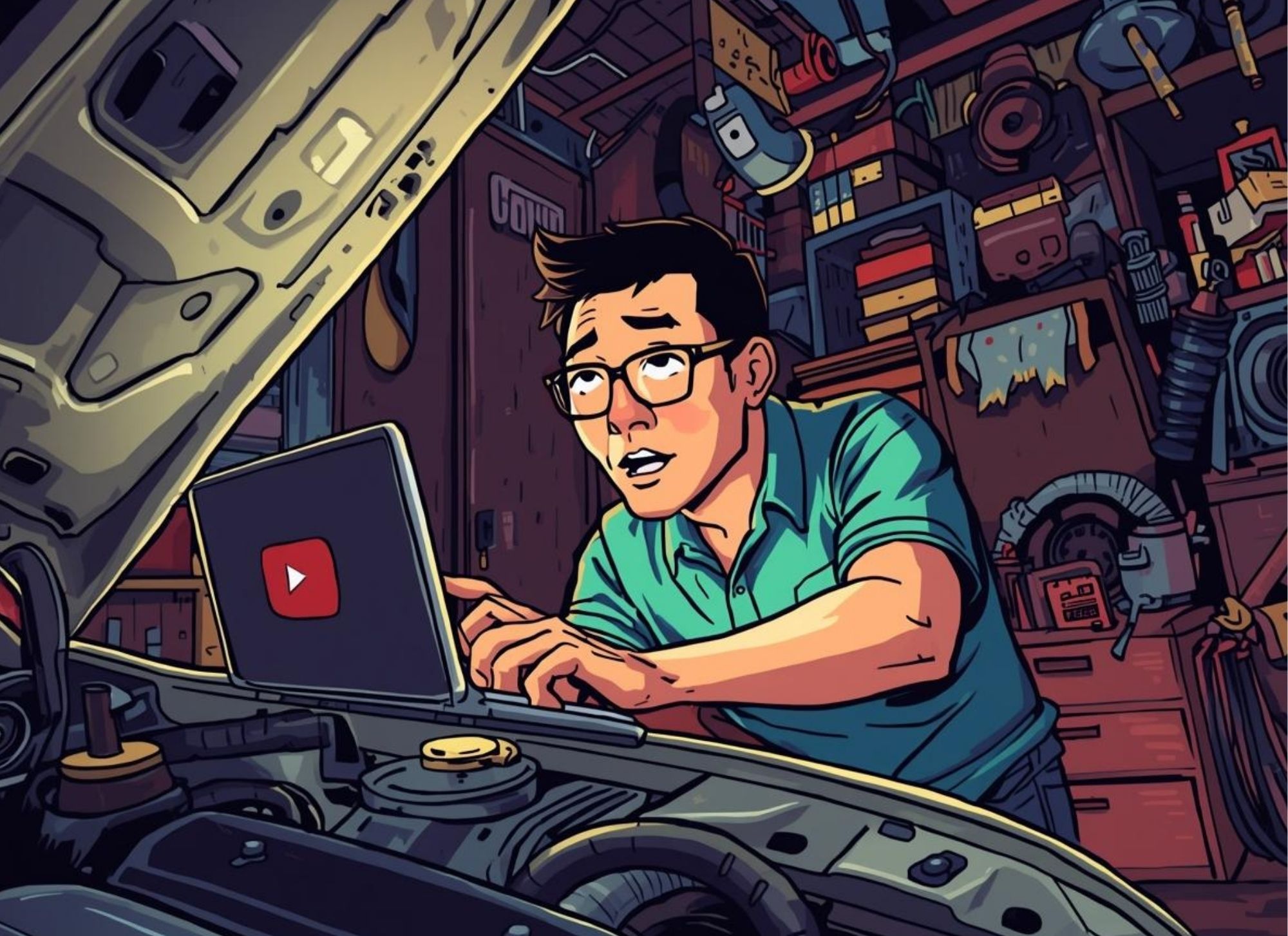
He followed the video step-by-step. 12-minute tutorial. 847,000 views. “Easy timing belt replacement—save $600!” The comments: “Did it myself, no problem!” “Easier than I thought!” “Thanks for saving me money!”
Four days after his DIY timing belt replacement, his engine made a horrible grinding noise and died at 65 MPH on the highway. The diagnosis: Timing off by 3 teeth. Pistons struck valves. 16 bent valves. Damaged pistons. Warped cylinder head.
Repair estimate: $8,200. YouTube tutorial savings: $600. Net cost of DIY: $7,600 more than professional service.
According to automotive service industry data and failure analysis from ASE-certified technicians, improperly performed DIY repairs account for 28-35% of catastrophic mechanical failures, with timing-related failures being the most expensive single category at an average repair cost of $6,800-$12,500.
The YouTube tutorial was technically accurate for ONE specific engine variant. His engine—despite being the “same” model year and make—had a different timing procedure requiring different tools. The video never mentioned this. The 847,000 views included thousands of different engine variants. Some succeeded. Many didn’t. The failures don’t make videos or leave comments.
My mechanic friend maintains a “Wall of DIY Shame”—photos of catastrophic failures from attempted DIY repairs on complex systems:
- Timing belt: 3 teeth off = $9,400 engine rebuild
- Airbag replacement: Deployed during installation = $3,200 + injuries
- Brake line repair: Failed at highway speed = totaled vehicle + lawsuit
- Suspension spring: Exploded during compression = broken arm, $18,000 medical
- Transmission rebuild: Contamination from dirty garage = $4,800 redo
This comprehensive risk analysis provides:
- The 7 catastrophic-risk repairs with 40-80% DIY failure rates
- Why timing belt failure destroys engines in 0.3 seconds (physics explained)
- Compressed spring energy calculations: 1,200 pounds of force = projectile weapon
- Brake system hydraulic contamination: how one air bubble causes total failure
- The tool cost reality: $8,500 in specialized equipment for transmission work
- Legal liability exposure: criminal charges for brake failures causing accidents
- Insurance policy voidance: DIY repairs on safety systems void coverage
- The skill acquisition timeline: 2-5 years for complex repair competency
- Professional diagnostic equipment: $12,000 scan tools vs. $50 OBD readers
- When DIY is appropriate: 15 tasks with <5% failure rates
This isn’t “don’t ever touch your car” advice. This is the failure analysis separating safe DIY maintenance (oil changes, filters, bulbs) from catastrophic-risk repairs (timing, brakes, suspension) based on actual failure rates, injury statistics, and economic damage data.
The 7 Catastrophic-Risk Repairs
#1: Timing Belt/Chain Replacement (Failure Rate: 40-55%)
Why timing matters to 0.01mm precision:
The timing belt’s function:
- Synchronizes crankshaft and camshaft rotation
- Controls valve opening/closing relative to piston position
- Prevents piston-valve collision
- Operates with ZERO error tolerance
The interference engine disaster:
Non-interference engine (rare):
- Timing failure = engine stops running
- No internal damage
- Replace belt, restart engine
- Total cost: $400-$800
Interference engine (85% of modern engines):
- Timing off by 1 tooth = partial damage
- Timing off by 2-3 teeth = catastrophic damage
- Timing failure at 3,000 RPM = 50 piston-valve collisions per second
Damage cascade timeline (0.3 seconds):
0.00 seconds: Belt slips 3 teeth 0.05 seconds: First piston-valve collision (8,000 PSI impact) 0.10 seconds: 5 valves bent, 2 pistons cracked 0.20 seconds: 12 valves destroyed, cylinder head damaged 0.30 seconds: Engine seizure, catastrophic failure complete
Repair requirements:
- Cylinder head removal: $1,200 labor
- 16 replacement valves: $800-$1,600
- Valve guides and seals: $400
- Cylinder head machining: $600-$1,200
- Piston replacement (if damaged): $1,500-$3,000
- Reassembly and timing setup: $1,200
- Total: $6,800-$12,500
Why DIY timing belt fails 40-55% of time:
Critical requirements almost never met:
- Specialized tools (cost: $600-$2,500 per engine family)
- Crankshaft holding tool
- Camshaft locking tools
- Tensioner adjustment tools
- Timing pin alignment tools
- Each engine design requires different tools
- Precise procedure knowledge
- TDC (Top Dead Center) verification
- Tensioner preload specifications
- Bolt torque sequences
- Timing mark alignment
- Break-in procedures
- Experience detecting problems
- Belt tracking on pulleys
- Tensioner spring feel
- Rotation resistance
- Timing verification before starting
What YouTube videos don’t show:
- 20 minutes of experienced mechanic’s verification checks
- The “feel” of correct tensioner preload
- How to detect misalignment before damage
- Recovery procedures when something’s wrong
- The 50 variations within same engine family
Professional timing belt service: $800-$1,500 DIY timing belt failure average cost: $7,600 Risk-adjusted DIY cost: $800 savings × 45% success rate = $360 expected savings versus $7,600 × 55% failure rate = $4,180 expected loss
Expected value of DIY timing belt: -$3,820 (NEGATIVE)
Never, ever DIY timing belts unless you’re a professional mechanic with the exact tools for your specific engine.
#2: Brake System Hydraulic Work (Failure Rate: 35-60%)
Why brake hydraulics have zero error tolerance:
The hydraulic principle:
- Incompressible fluid transmits force
- ANY air in system = compressible gas = brake failure
- 1% air contamination = 40% brake force loss
- 3% air contamination = 85% brake force loss
- 5% air contamination = total brake failure
The catastrophic failure scenarios:
Scenario 1: Air in brake lines
- DIYer replaces brake caliper
- Doesn’t properly bleed system
- Small air pockets remain
- Brakes feel “soft” but work at low speed
- Emergency stop needed at highway speed
- Pedal goes to floor (air compresses)
- Insufficient braking force
- Rear-end collision at 45 MPH
Result: $18,000 vehicle damage + injuries + liability
Scenario 2: Brake fluid contamination
- DIYer opens brake fluid reservoir in garage
- Dust/dirt enters system
- Contamination damages ABS pump ($1,800 part)
- ABS failure during emergency braking
- Loss of vehicle control
Scenario 3: Incorrect brake line routing
- DIYer replaces brake line
- Routes line too close to exhaust
- Heat degrades line over 2 months
- Line ruptures during braking
- Complete brake failure, one wheel only
- Vehicle pulls violently to one side
- Collision with opposing traffic
Legal liability exposure:
Criminal charges possible:
- Vehicular manslaughter (if fatality occurs)
- Reckless endangerment
- Criminal negligence
Civil liability:
- Full damages for any collision caused
- Punitive damages possible
- Insurance coverage VOID (improper repair clause)
- Personal assets at risk
One brake failure causing injury: $500,000+ liability exposure
Why DIY brake hydraulics fails 35-60% of time:
Requirements almost never met by DIYers:
- Proper bleeding equipment
- Professional brake bleeder: $800-$2,500
- Pressure bleeding vs. manual pumping
- ABS module bleeding procedures
- Sequence requirements by vehicle
- Contamination prevention
- Clean room environment
- Sealed fluid containers
- Proper hose connections
- No introducing air
- System-specific knowledge
- ABS bleeding procedures (complex)
- Electronic brake distribution
- Brake assist systems
- Traction control integration
What goes wrong:
- Air introduced during line connection
- Fluid contamination from dirty environment
- ABS module not properly bled (requires scan tool)
- Brake lines kinked or improperly routed
- Wrong fluid type used (DOT 3 vs. DOT 4 vs. DOT 5.1)
- Seals damaged during installation
Professional brake service: $150-$600 depending on work DIY brake failure consequences: $8,000-$500,000+ (including liability)
Risk-adjusted DIY: NEVER worth it for hydraulic work
#3: Suspension Spring Compression (Failure Rate: 25-40% injury)
The physics of stored energy:
Coil spring specifications:
- Typical front suspension spring
- Free length: 16 inches
- Compressed length: 10 inches
- Compression: 6 inches
- Spring rate: 200 lbs/inch
- Stored energy: 3,600 foot-pounds
Energy comparison:
3,600 ft-lbs of spring energy equals:
- .44 Magnum bullet: 1,000 ft-lbs (spring has 3.6x more energy)
- 12-gauge shotgun: 2,500 ft-lbs (spring has 1.4x more energy)
- Falling 15 feet onto concrete: 2,400 ft-lbs (spring has 1.5x more)
A compressed suspension spring is a loaded weapon with more energy than most firearms.
Catastrophic failure scenarios:
Scenario 1: Spring compressor slips
- DIYer compressing spring for strut replacement
- Harbor Freight spring compressor ($40)
- Compression hooks slip off spring coil
- Spring expands violently in 0.05 seconds
- Impacts DIYer’s chest at 80 MPH
- Shattered ribs, punctured lung
- $47,000 medical bills + permanent injury
Scenario 2: Uneven compression
- Spring compressed unevenly
- One side releases while other side compressed
- Spring whips sideways
- Strikes DIYer’s face
- Orbital fracture, lost eye
- $180,000 medical + disability
Professional suspension work requirements:
Equipment:
- Hydraulic spring compressor: $3,500-$8,000
- Safety cage: $1,500
- Proper training: Years
- Safety protocols: Extensive
Procedure:
- Spring compressed slowly, evenly
- Safety cage contains potential release
- Experienced feel for proper compression
- Backup safety systems
Professional strut replacement: $400-$800 per axle DIY spring compressor injury: $25,000-$200,000 medical + lost work + disability
Cost-benefit: NEVER compress springs without professional equipment and training
#4: Major Engine Diagnostics (Failure Rate: 70-85%)
Why $50 OBD scanners don’t actually diagnose anything:
The diagnostic reality:
Consumer OBD scanner ($50):
- Reads generic fault codes
- Provides code number (P0171)
- Provides generic description (“System Too Lean Bank 1”)
- NO diagnostic capability
- NO component testing
- NO live data analysis
Professional scan tool ($12,000-$25,000):
- Reads manufacturer-specific codes
- Bi-directional testing (commands components to test)
- Live data from 200+ sensors simultaneously
- Graphing and data logging
- Component activation testing
- Software programming capability
- Service bulletins integrated
- Guided diagnostics
Why “System Too Lean” isn’t a diagnosis:
P0171 “System Too Lean Bank 1” has 47 possible causes:
- Vacuum leak (12 possible locations)
- MAF sensor failure
- Dirty MAF sensor
- Intake air leak
- Exhaust leak before O2 sensor
- Fuel pressure low (8 possible causes)
- Fuel pump weak
- Fuel filter clogged
- Fuel injector clogged (6 cylinders)
- O2 sensor failure (4 sensors)
- PCV valve stuck 12-47. [35 additional technical causes]
DIYer approach: “Code says ‘too lean’—must be O2 sensor!” Replaces O2 sensor: $180 Code returns Replaces MAF sensor: $220 Code returns Replaces fuel pump: $450 Code still there Total wasted: $850 on parts that weren’t the problem Actual cause: $3 vacuum hose cracked
Professional diagnostic approach:
- Read all codes and freeze frame data
- Check technical service bulletins (known issues)
- Perform smoke test for vacuum leaks ($15 diagnosis)
- Find cracked hose, replace $3 part
- Clear codes, verify repair
- Total cost: $85 diagnostic + $45 labor + $3 part = $133
DIY diagnostic failure: $850 wasted + still not fixed Professional diagnosis: $133, problem solved
#5: Transmission Internal Work (Failure Rate: 90-95%)
Why transmission work requires 2,000 specialized tools:
Transmission complexity:
- 400-800 internal components
- Tolerances to 0.001 inch
- Clutch packs, bands, servos, valves
- Planetary gear sets
- Torque converter
- Electronic controls
- Hydraulic circuits
The contamination disaster:
Clean room requirements:
- Transmission rebuild requires hospital-level cleanliness
- One grain of sand = transmission failure
- Lint from clothing = transmission failure
- Dust from garage air = transmission failure
DIYer garage environment:
- Concrete dust in air
- Metal shavings on workbench
- Dirt on tools
- Clothing fibers
- Airborne contamination
Result: 95% of DIY transmission rebuilds fail within 500 miles
The tool reality:
Essential transmission tools:
- Transmission jack: $800
- Clutch pack tools: $1,200
- Snap ring pliers (25 sizes): $600
- Dial indicators: $400
- Hydraulic press: $2,000
- Bearing pullers: $800
- Specialized measuring tools: $2,000
- Plus 1,970 additional specialized tools
Total tool investment: $45,000-$80,000
For perspective:
- Professional transmission shop: $80,000 in tools, used daily
- DIYer: Buy $80,000 in tools for one transmission?
Professional transmission rebuild: $2,800-$4,500 DIY transmission rebuild failure: $2,800-$4,500 (still need professional rebuild) + $1,200 in purchased tools never used again + 40 hours of wasted time
Total DIY cost: $4,000-$5,700 PLUS professional rebuild still required
Transmission work: ALWAYS professional
#6: Airbag System Work (Failure Rate: 60-75%)
Why airbag DIY is criminally dangerous:
Airbag deployment force:
- Deploys at 200 MPH
- Impact force: 2,000 pounds
- Timing: 0.03 seconds
- Temperature: 300°F briefly
If airbag deploys while you’re installing it:
- Broken facial bones
- Blindness
- Severe burns
- Traumatic brain injury
- Death
Accidental deployment triggers:
- Static electricity (from your body)
- Incorrect connector handling
- Battery connected during work
- Wrong resistance during testing
- Improper tool contact
DIY airbag scenarios gone wrong:
Scenario 1:
- Replacing steering wheel on older car
- Disconnects airbag connector with battery connected
- Airbag deploys into face
- Multiple facial fractures, $85,000 medical
Scenario 2:
- Replacing side airbag in seat
- Uses metal tool near airbag connector
- Static discharge triggers deployment
- Airbag deploys sideways into installer
- Ruptured spleen, emergency surgery
Legal requirements:
Many states require certified technicians for airbag work due to:
- Explosive device handling
- Safety system tampering
- Liability concerns
Professional airbag replacement: $800-$2,000 DIY airbag injury: $50,000-$500,000 medical + permanent disability
Risk: NEVER worth it
#7: Fuel System High-Pressure Work (Failure Rate: 45-65%)
Modern fuel injection pressure: 2,000-3,000 PSI
For perspective:
- Garden hose: 60 PSI
- Pressure washer: 2,000 PSI (can cut through skin)
- Fuel injector: 2,000-3,000 PSI + flammable
The fuel injection injury:
Fuel injection into skin:
- Pressurized fuel penetrates skin
- Travels through tissue
- Causes chemical burns internally
- Requires emergency surgery
- Risk of amputation if in extremity
- Gasoline poisoning from absorption
Fire hazard:
Garage fuel system work:
- Fuel sprays at high pressure
- Creates fine mist (explosive)
- Ignition from ANY spark
- Pilot light, electrical switch, static
- Garage becomes fireball
- Structure fire, total loss
Recent case: Texas DIYer
- Replacing fuel injectors
- Didn’t properly depressurize system
- Fuel sprayed under pressure
- Ignited from water heater pilot light
- Garage fully engulfed in 15 seconds
- Home damage: $180,000
- Injuries: 2nd and 3rd degree burns
Professional fuel system service: $400-$1,200 DIY fuel system fire: $150,000-$500,000 property damage + injuries + potential death
When DIY Is Appropriate: The Safe List
15 Low-Risk Maintenance Tasks (<5% Failure Rate)
Safe DIY when you have basic tools and knowledge:
- Engine oil and filter change
- Failure risk: 3%
- Savings: $40-$80 per change
- Requirements: Jack stands, drain pan, filter wrench
- Consequence of failure: Mess, not catastrophic
- Air filter replacement
- Failure risk: <1%
- Savings: $30-$60
- Requirements: None
- Consequence: Reduced engine performance
- Cabin air filter replacement
- Failure risk: <1%
- Savings: $40-$80
- Requirements: None usually
- Consequence: Reduced HVAC airflow
- Wiper blade replacement
- Failure risk: <1%
- Savings: $20-$40
- Requirements: None
- Consequence: Poor visibility (replace immediately)
- Battery terminal cleaning
- Failure risk: 2%
- Savings: $30-$60
- Requirements: Wire brush, wrenches
- Consequence: Poor electrical connection
- Headlight/taillight bulb replacement (non-HID)
- Failure risk: 5%
- Savings: $30-$80
- Requirements: Basic tools
- Consequence: Reduced visibility
- Tire pressure check and adjustment
- Failure risk: <1%
- Savings: $0 (free at gas stations, but convenience)
- Requirements: Tire gauge
- Consequence: Reduced fuel economy, tire wear
- Tire rotation
- Failure risk: 8% (if lug nuts improperly torqued)
- Savings: $30-$60
- Requirements: Jack, stands, torque wrench (critical)
- Consequence: Wheel loss if done wrong (MUST use torque wrench)
- Spark plug replacement (if accessible)
- Failure risk: 12%
- Savings: $80-$200
- Requirements: Spark plug socket, gap tool, torque wrench
- Consequence: Misfires, possible coil damage
- Serpentine belt replacement (non-timing)
- Failure risk: 15%
- Savings: $60-$120
- Requirements: Belt routing diagram (photo before removal)
- Consequence: Accessories stop working, potential overheating
- Coolant drain and fill (not system flush)
- Failure risk: 20%
- Savings: $80-$150
- Requirements: Drain pan, funnel, proper coolant
- Consequence: Air pockets causing overheating
- Battery replacement
- Failure risk: 5%
- Savings: $40-$80
- Requirements: Wrenches, battery terminal cleaning
- Consequence: Incorrect installation, poor connection
- PCV valve replacement
- Failure risk: 8%
- Savings: $50-$100
- Requirements: Basic tools
- Consequence: Rough idle, oil consumption
- Thermostat replacement (if accessible, non-timing)
- Failure risk: 25%
- Savings: $100-$200
- Requirements: Basic tools, new gasket, coolant
- Consequence: Overheating or overcooling
- Oxygen sensor replacement (if accessible)
- Failure risk: 18%
- Savings: $80-$150
- Requirements: O2 sensor socket
- Consequence: Check engine light, reduced fuel economy
Critical DIY success factors:
✓ Have ALL proper tools before starting ✓ Research procedure for YOUR EXACT vehicle ✓ Work in clean, well-lit environment ✓ Use factory torque specifications ✓ Double-check all connections ✓ Test drive carefully after completion ✓ Monitor for issues over next few days
Conclusion: The Risk-Adjusted Decision Framework
DIY automotive repair isn’t categorically bad—it’s about matching task complexity to your skill level, tools, and risk tolerance.
The decision matrix:
ALWAYS DIY (if capable):
- Oil changes
- Filter replacements
- Wiper blades
- Battery terminals
- Tire pressure
SOMETIMES DIY (if experienced):
- Spark plugs (accessible engines)
- Serpentine belts (non-timing)
- Battery replacement
- Simple sensor replacement
NEVER DIY:
- Timing belts/chains
- Brake hydraulics
- Suspension spring compression
- Major engine diagnostics
- Transmission internals
- Airbag systems
- High-pressure fuel systems
The economic reality:
Total annual DIY savings potential (safe tasks): $600-$1,200 Single catastrophic DIY failure cost: $5,000-$500,000
One timing belt failure wipes out 8 years of oil change savings. One brake failure creates unlimited liability. One spring compression injury costs more than a lifetime of professional suspension work.
DIY the maintenance. Leave the complex repairs to professionals. Your safety and financial security depend on knowing the difference.
Safety Disclaimer: This guide provides general information about automotive repair risks. Every vehicle and situation is unique. Always consult professional mechanics for repairs beyond your skill level. Improper repairs can cause property damage, injury, or death. The author and publisher assume no liability for DIY repair attempts or outcomes.