

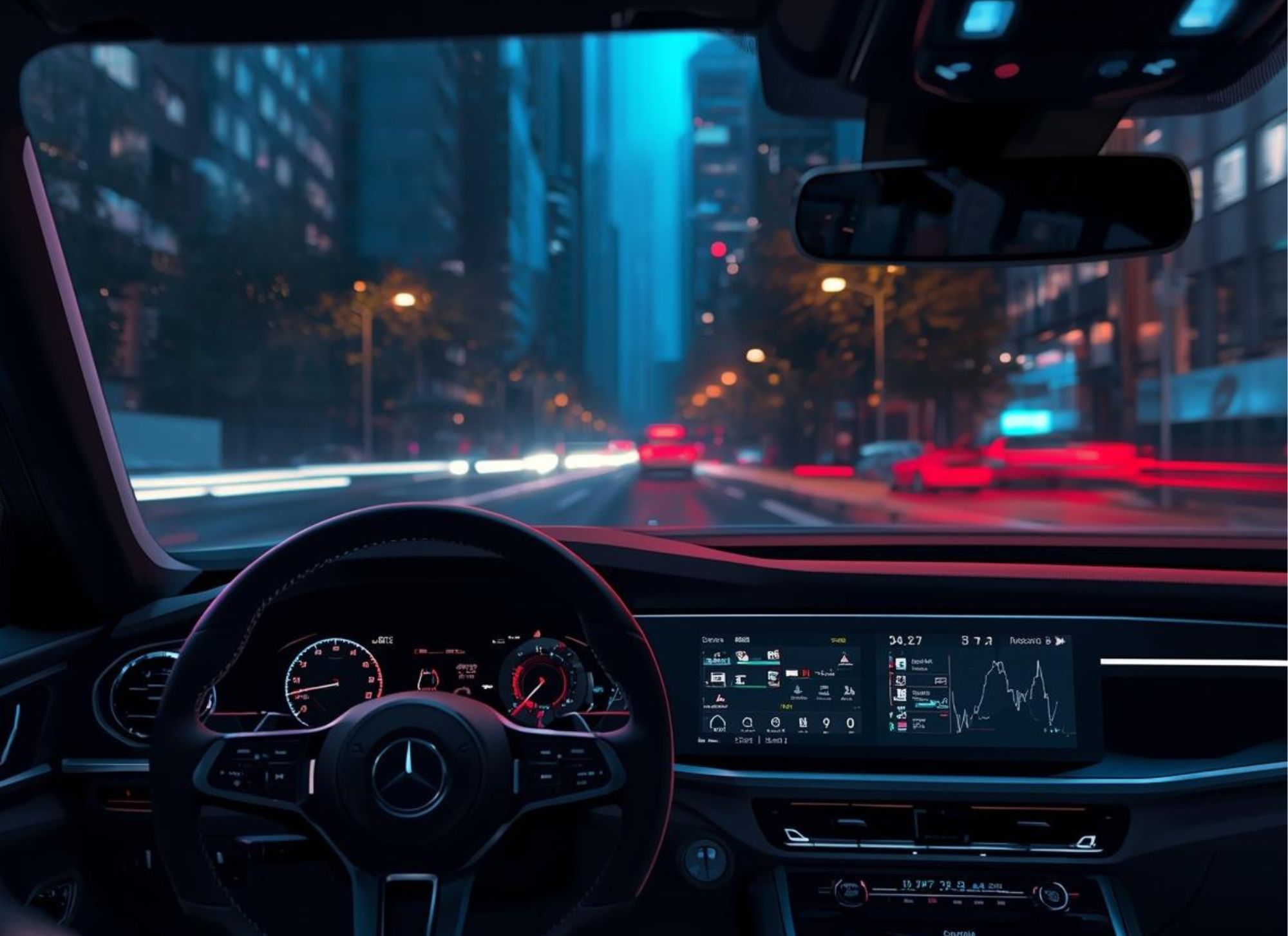
Learn how to protect your connected car from hackers in 2025. Discover the latest automotive cybersecurity threats, practical defense strategies, and essential tips every smart car owner needs to know.
The Wake-Up Call Every Car Owner Needs to Hear
Imagine settling into your driver’s seat on a Monday morning, only to discover that someone across town just unlocked your doors, started your engine, and disabled your braking system—all without ever touching your vehicle. Sound like a Hollywood thriller? Think again.
This is the new reality of automotive ownership in 2025, where your car contains more lines of code than a fighter jet and presents more entry points for cybercriminals than your home computer. Here’s the unsettling truth: cyber incidents targeting vehicles have exploded by 225% in just three years, with ransomware gangs launching over 100 coordinated attacks on automotive companies throughout 2024 alone.
But here’s what the headlines won’t tell you: while the threat landscape has transformed dramatically, the average driver’s risk remains surprisingly low. The real question isn’t whether hackers can compromise your vehicle—it’s whether they have any reason to target yours specifically, and more importantly, what simple steps can slash your vulnerability by over 80%.
Let’s cut through the fear-mongering and arm you with practical, actionable intelligence.
How Your Daily Driver Became a Hacker’s Playground
The Computerization Revolution Nobody Warned You About
Modern vehicles aren’t just cars with a few electronic bells and whistles. They’re sophisticated data centers that happen to have wheels. Consider this jaw-dropping comparison: today’s average family sedan contains approximately 100 million lines of code—roughly 15 times more than the Boeing 787 Dreamliner.
This digital transformation has created what cybersecurity experts call an “attack surface”—essentially, every point where a hacker might gain entry. Your grandfather’s 1985 sedan had zero attack surfaces. Your 2024 SUV? Conservatively, it has over 150 distinct vulnerability points spread across dozens of interconnected systems.
The automotive cybersecurity industry’s meteoric rise tells the story. Market analysts project this sector will balloon to $22.2 billion by 2032, representing a staggering 22% annual growth rate. That’s not investor hype—it’s a direct response to an escalating arms race between automakers and increasingly sophisticated criminal networks.
The Real-World Wake-Up Calls
Recent breaches have shattered any illusions about theoretical versus practical threats. In late 2024, security researchers uncovered devastating vulnerabilities in the BlueSDK Bluetooth stack—a component embedded in millions of vehicles manufactured by Mercedes-Benz, Volkswagen, and Skoda. This single weakness could have allowed attackers to unlock doors, track locations, and potentially manipulate vehicle functions across entire fleets simultaneously.
The kicker? Many vehicle owners remained completely unaware their cars were vulnerable until researchers publicly disclosed the flaw months after discovery.
The Five Gateways Hackers Use to Hijack Your Vehicle
Understanding how criminals actually penetrate automotive defenses is the first step toward building effective protection. Let’s break down the most exploited entry points in order of real-world frequency.
Gateway #1: Your Key Fob Is Broadcasting Your Vulnerability
Here’s a sobering reality: two-thirds of all automotive cyber incidents in 2024 involved compromised telematics and application servers, but for everyday car theft, keyless entry systems remain the number one target.
The attack method is disturbingly simple and cheap. Criminals deploy signal relay devices—available online for as little as $22—that amplify and extend your key fob’s radio signal. When you’re inside your home with your keys hanging by the door, thieves position one device near your house to capture the signal, then transmit it to an accomplice standing beside your vehicle. Your car, detecting what appears to be your legitimate key nearby, obligingly unlocks and starts.
Real-World Example: In a 2024 Toronto police sting operation, investigators recovered over 50 luxury vehicles stolen using this exact method in a single month. Not one required traditional lock-picking or window smashing.
Gateway #2: Your Entertainment System Isn’t Just for Music
Your infotainment touchscreen represents your vehicle’s most internet-exposed system. It connects to WiFi networks, streams music from cloud services, runs third-party apps, and communicates with your smartphone—making it an irresistible target for attackers seeking network access.
Once hackers compromise your infotainment system, they can potentially pivot to your vehicle’s Controller Area Network (CAN bus)—the digital backbone that manages critical functions including braking, acceleration, steering, and airbag deployment. Think of the CAN bus as your car’s central nervous system; compromising it is like gaining administrative access to a computer’s operating system.
Gateway #3: Telematics Services Create Always-On Vulnerabilities
Services like GM’s OnStar, Toyota’s Safety Connect, and Tesla’s connected features provide genuine value—emergency response, stolen vehicle tracking, remote diagnostics, and more. However, these same always-connected communication channels create persistent attack vectors.
Unlike your smartphone that you can power off, your vehicle’s telematics systems remain active 24/7, constantly pinging cellular towers and transmitting data. This continuous connectivity means hackers don’t need physical proximity; they can potentially probe your vehicle’s defenses from thousands of miles away.
Gateway #4: Third-Party Gadgets You Invited Inside
That insurance monitoring dongle promising discounts on your premiums? The aftermarket dashcam you installed last month? The OBD-II diagnostic scanner you use to check engine codes? Each one connects directly to your vehicle’s internal networks, and many lack robust security protocols.
Even seemingly benign smartphone apps that remotely start your car, unlock doors, or check tire pressure create additional pathways for exploitation. Every third-party integration expands your attack surface exponentially.
Gateway #5: The Human Element (Yes, You)
Sophisticated social engineering attacks increasingly target vehicle owners directly. Phishing emails impersonating your automaker, fraudulent software update notifications, malicious QR codes placed on charging stations—criminals exploit human psychology just as aggressively as they exploit technical vulnerabilities.
2025’s Emerging Threat Landscape: What’s Different This Year
Artificial Intelligence Becomes a Double-Edged Sword
The integration of AI into vehicles introduces unprecedented capabilities—and unprecedented risks. Modern cars use machine learning for adaptive cruise control, lane-keeping assistance, voice recognition, and driver behavior analysis. Each AI system creates new potential vulnerabilities.
Meanwhile, attackers are weaponizing AI for offensive purposes:
Automated Vulnerability Discovery: AI-powered scanning tools can probe millions of code lines in hours, identifying exploitable weaknesses faster than human security researchers can patch them.
Hyper-Targeted Social Engineering: Machine learning algorithms analyze your social media profiles, purchasing history, and online behavior to craft convincing phishing attacks specifically designed to fool you.
Deepfake Audio Attacks: Sophisticated voice synthesis can replicate your speech patterns, potentially allowing criminals to issue authenticated voice commands to your vehicle’s systems or bypass voice-based security features.
Supply Chain Security Has Become the Weakest Link
Modern vehicles incorporate components from hundreds of global suppliers. A single compromised sensor from a third-tier manufacturer in one country can introduce vulnerabilities into thousands of vehicles assembled half a world away.
The interconnected nature of automotive manufacturing means security is only as strong as the least-protected supplier in the entire chain. This reality keeps cybersecurity professionals awake at night because manufacturers have limited visibility into and control over their extended supply networks.
Electric Vehicle Infrastructure Presents Uncharted Territory
The rapid expansion of public EV charging networks has created an entirely new attack surface that barely existed three years ago. Many charging stations utilize the Open Charge Point Protocol (OCPP), which was designed for functionality and interoperability—not security.
Potential attack scenarios include:
- Malware injection through compromised charging stations
- Data interception capturing payment information and charging patterns
- Grid manipulation attacks using networked charging infrastructure as access points
- Physical safety risks from tampered charging equipment
The charging network’s web of interdependent players—station manufacturers, network operators, payment processors, utility companies—creates multiple potential weak points in the security chain.
Your Comprehensive Defense Strategy: From Basic to Advanced
Effective automotive cybersecurity doesn’t require a computer science degree. It requires implementing layered defenses that address both digital and physical vulnerabilities. Here’s your step-by-step blueprint.
Level 1: Quick Wins You Can Implement Today (15 Minutes)
Secure Your Digital Footprint
Stop Broadcasting Your Home Address: Never store “Home” as a destination in your vehicle’s GPS or connected apps. If your car is stolen or its data breached, you’ve just handed criminals your residential address. Instead, save a nearby intersection or public landmark.
Activate Multi-Factor Authentication: Enable two-factor authentication on every connected service associated with your vehicle—manufacturer apps, third-party services, linked accounts. This single step blocks the overwhelming majority of credential-based attacks.
Review App Permissions: Audit which smartphone apps have access to your vehicle. Remove permissions for apps you no longer use and question why any app needs certain access levels.
Physical Security Still Matters
Invest in a Faraday Pouch: These signal-blocking pouches (available for $15-40) prevent relay attacks by completely blocking your key fob’s radio transmission when stored inside. Keep your keys in the pouch overnight and you’ve eliminated the most common theft method.
Add Old-School Deterrents: A visible steering wheel lock serves dual purposes—it creates a physical barrier requiring time and tools to defeat, and it signals to thieves that you’re security-conscious, encouraging them to choose easier targets.
Choose Parking Strategically: Well-lit areas with foot traffic and security cameras significantly reduce theft risk. When given a choice, these factors matter more than proximity to your destination.
Level 2: Establishing Strong Security Hygiene (Monthly Commitment)
Master Software Update Management
Automakers regularly release security patches addressing newly discovered vulnerabilities. However, unlike your smartphone that updates automatically overnight, vehicle updates often require owner initiative.
Set Calendar Reminders: Block 30 minutes monthly to check your manufacturer’s website or app for available updates.
Understand Your Update Process: Some manufacturers offer over-the-air (OTA) updates that install wirelessly. Others require downloading files to a USB drive and installing manually through your vehicle’s interface. Know which method your car uses.
Don’t Delay Critical Security Updates: When manufacturers label an update as security-related, prioritize it immediately. These patches address actively exploited vulnerabilities.
Monitor Recall Notifications Actively
Many automotive recalls address cybersecurity vulnerabilities rather than traditional mechanical failures. However, recall notifications sent via mail can be overlooked or delayed.
Register at NHTSA.gov: The National Highway Traffic Safety Administration maintains a free recall lookup tool. Check your VIN quarterly to catch recalls before you receive official notification.
Understand That “Recall” Means “Free Fix”: Many drivers ignore recalls out of inconvenience. Remember that manufacturers must repair recalled vehicles at no cost, including cybersecurity-related issues.
Vet Third-Party Apps Before Installation
That free app promising to add features your manufacturer didn’t include? It might cost you far more than its zero-dollar price tag.
Check Developer Reputation: Only install apps from established companies with verifiable track records. Read recent reviews specifically mentioning security concerns.
Scan Before Installing: Run any car-related app through reputable antivirus software before granting it access to your vehicle.
Understand Permission Requests: If an app asks for permissions that seem unrelated to its stated purpose, that’s a red flag. A simple fuel economy tracker shouldn’t need access to your contacts, microphone, or location when the app isn’t running.
Level 3: Advanced Protection for High-Risk Profiles
When Professional Assessment Makes Sense
Certain vehicle owners face elevated risks that justify professional cybersecurity evaluation:
High-Profile Individuals: Executives, celebrities, politicians, and other public figures may be specifically targeted for surveillance, harassment, or data theft.
Fleet Operators: Companies managing vehicle fleets present attractive targets because compromising one vehicle can provide access to dozens or hundreds more.
Heavily Modified Vehicles: Extensive aftermarket modifications—particularly those involving vehicle networks—introduce unpredictable vulnerabilities that generic advice can’t address.
A professional automotive cybersecurity assessment typically costs $500-2000 but provides customized recommendations based on your specific vehicle configuration, usage patterns, and risk profile.
Implement Network Segmentation Where Possible
Some advanced users can configure their vehicles’ wireless systems to isolate entertainment and convenience features from critical safety systems. This approach prevents hackers who compromise your infotainment system from pivoting to brake or steering controls.
However, this requires technical knowledge and may void warranties. Consult with professionals before attempting network segmentation on your own.
Consider Privacy-Focused Alternatives
GPS Privacy: For navigation, consider using a standalone GPS unit with no wireless connectivity rather than integrated systems that transmit your location data continuously.
Minimize Data Collection: Many connected vehicle features are optional. Evaluate whether the convenience of remote start via smartphone app justifies the expanded attack surface it creates.
Review Privacy Policies: Understand what data your vehicle manufacturer collects, how they use it, who they share it with, and how long they retain it. Many manufacturers offer opt-out provisions for non-essential data collection.
What Automakers Are Doing (And Why It’s Not Enough)
Regulatory Progress Is Accelerating
The automotive industry is finally developing comprehensive cybersecurity standards. ISO and SAE are expected to publish updated standards including ISO SAE PAS 8475 for Cyber Security Assurance Levels in the second half of 2025. These frameworks will give manufacturers clearer benchmarks for security implementation.
However, regulatory standards typically lag years behind evolving threats. Hackers innovate faster than standards bodies can publish requirements.
Built-In Security Features Are Improving
Modern vehicles increasingly ship with multilayered security architectures:
Intrusion Detection Systems: Like antivirus software for your car, these systems monitor network traffic for unusual patterns that might indicate an attack in progress.
End-to-End Encryption: Communication between vehicle components increasingly uses encrypted channels that prevent eavesdropping and tampering.
Secure Boot Protocols: These verify that software is authentic and unmodified before loading it, preventing malware from gaining a foothold during the startup process.
Air-Gapped Critical Systems: The most safety-critical functions are increasingly isolated on separate networks with no connection to internet-facing systems, making remote attacks impossible.
The Innovation Paradox
Here’s the uncomfortable truth: every new feature manufacturers add to make vehicles smarter, more connected, and more convenient also expands the attack surface. The industry faces a fundamental tension between innovation and security that won’t be resolved anytime soon.
The Realistic Risk Assessment: Should You Actually Worry?
Let’s inject some much-needed perspective into this discussion.
Why Your Car Probably Won’t Be Targeted
Limited Profit Potential: Unlike your bank account or cryptocurrency wallet, your vehicle typically doesn’t contain directly monetizable data. Hackers seeking financial gain find easier, more lucrative targets.
High Technical Barriers: Successfully compromising modern vehicle security requires specialized knowledge, custom tools, and significant time investment. Most criminals prefer simpler crimes with faster payoffs.
Physical Proximity Requirements: Many attack vectors require the hacker to be within wireless range of your vehicle—typically 50-100 feet for most methods. Remote attacks are possible but significantly more complex.
Detection Risks: Vehicle hacking leaves digital forensic traces and often requires physical proximity, increasing criminals’ risk of identification and capture compared to purely online crimes.
When Your Risk Level Increases Significantly
You’re a High-Profile Target: Public figures, wealthy individuals, or people with access to valuable information face dramatically higher risks because attackers have specific motivations beyond opportunistic crime.
You Operate a Fleet: Business fleets present economies of scale for attackers—compromise the central management system once, potentially control hundreds of vehicles.
You’ve Extensively Modified Your Vehicle: Aftermarket additions, particularly those interfacing with vehicle networks, often lack the security testing that OEM components receive.
You Own Cutting-Edge Technology: Early adopters of new vehicle technologies become de facto beta testers for security as well as features. Vulnerabilities in brand-new systems haven’t been discovered and patched yet.
The Future Is Coming Fast: Autonomous Vehicles and V2X Communication
Self-Driving Cars Multiply the Stakes
As vehicles gain autonomous capabilities, the potential damage from cyberattacks increases exponentially. A hacked entertainment system is an inconvenience; a compromised autonomous driving system could cause mass casualties.
The challenge intensifies because autonomous systems rely on standardized platforms for machine learning and sensor fusion. Platform standardization, while necessary for development efficiency, means a single vulnerability could affect millions of vehicles simultaneously across multiple manufacturers.
Vehicle-to-Everything Communication Creates New Attack Vectors
Future transportation systems will rely on vehicles communicating with each other (V2V) and with infrastructure (V2X)—traffic lights, road sensors, charging stations, and more. This interconnectedness promises improved traffic flow, enhanced safety, and better efficiency.
It also creates an infinitely more complex attack surface. A compromised traffic signal could send malicious data to passing vehicles. A hacked vehicle could broadcast false information to others, creating phantom traffic jams or masking real hazards.
Implementing secure V2X communication requires solving problems that current security frameworks weren’t designed to address, including:
- Authentication of thousands of simultaneous connections in real-time
- Secure communication without creating latency that negates safety benefits
- Preventing spoofing attacks where malicious actors impersonate legitimate vehicles or infrastructure
- Balancing privacy (not broadcasting your vehicle’s identity constantly) with accountability (identifying vehicles that transmit malicious data)
Your Practical Action Plan: Security Maintenance Schedule
Effective cybersecurity isn’t a one-time setup—it’s an ongoing practice. Here’s your maintenance calendar.
Weekly Quick Checks (2 Minutes)
- Verify your key fob is stored in its Faraday pouch overnight
- Confirm no unfamiliar devices appear in your vehicle’s Bluetooth pairing list
- Check for any unexpected battery drain that might indicate unauthorized system activity
Monthly Security Routine (30 Minutes)
- Check manufacturer website for software updates
- Review and remove unnecessary connected apps
- Verify two-factor authentication remains enabled on all services
- Scan for unusual behavior—unexpected system messages, features activating without input, battery draining faster than normal
Quarterly Deep Dive (2 Hours)
- Change passwords on all connected vehicle services
- Review privacy settings and data sharing permissions
- Run a full security scan on any smartphone apps connected to your vehicle
- Check NHTSA recall database for your VIN
- Review credit card statements for unfamiliar charges (some attacks target payment information stored in vehicle systems)
Annual Comprehensive Assessment
- Professional cybersecurity evaluation (for high-risk profiles)
- Complete password reset across all connected services
- Review and update emergency response plans
- Research new threats specific to your vehicle make, model, and year
- Evaluate whether new security products or services warrant investment
Common Questions About Automotive Cybersecurity
Q: Can hackers really control my car’s brakes or steering remotely?
Technically yes, but practically it’s extremely rare. While researchers have demonstrated these capabilities in controlled environments, successfully executing such an attack against a random vehicle requires extensive knowledge, custom tools, physical proximity or prior access, and sophisticated skill. You’re exponentially more likely to experience a mechanical brake failure than a cyber-induced one.
Q: Are electric vehicles more vulnerable than gas-powered cars?
Not inherently. EVs and conventional vehicles face similar cybersecurity challenges since the vulnerability primarily stems from connected systems (infotainment, telematics) rather than the propulsion method. However, EV charging infrastructure does introduce additional attack vectors that gas stations don’t present.
Q: Should I disable all my car’s connected features for security?
This represents excessive caution for most drivers. Connected features provide genuine safety and convenience benefits. Instead of wholesale disconnection, implement the layered security practices outlined above, which allow you to enjoy modern features while managing risks appropriately.
Q: How do I know if my car has been hacked?
Warning signs include: unexpected system behavior, features activating without input, unusual battery drain, unfamiliar devices in pairing lists, unexplained changes to saved settings, or diagnostic error messages that disappear without explanation. However, sophisticated attacks may leave no obvious traces, which is why preventive security matters more than detection.
Q: Does my car insurance cover cyber attacks?
Most standard auto policies don’t explicitly address cyber incidents. Contact your insurer to understand your coverage and whether cyber-specific endorsements are available. As automotive hacking becomes more common, insurance products are evolving to address this gap.
The Bottom Line: Informed Action Beats Paranoia
The global cybersecurity threat landscape is intensifying, with projected annual damages reaching $10.5 trillion by 2025. Your vehicle represents one piece of this expanding puzzle.
However, context matters enormously. While the possibility of automotive cyber attacks is real and growing, the probability that your specific vehicle will be targeted remains low for most drivers. The sweet spot lies in implementing reasonable, layered defenses without abandoning the genuine benefits that connected vehicle features provide.
Think of automotive cybersecurity like wearing a seatbelt. You don’t live in constant fear of car crashes, but you buckle up every time because it’s a simple precaution that dramatically reduces risk. Similarly, basic security hygiene—protecting your key fob, updating software, vetting apps, using strong authentication—provides substantial protection without requiring paranoia or technical expertise.
The automotive industry is experiencing its most significant transformation since the assembly line. Connected features, autonomous capabilities, and intelligent systems promise safer, more efficient, more enjoyable transportation. Cybersecurity risks are the price of admission to this new era—but they’re manageable risks, not insurmountable barriers.
Your role in this ecosystem matters more than you might think. Every driver who implements basic security practices creates positive network effects that benefit the broader automotive community. Manufacturers notice what customers prioritize and invest accordingly. Criminals target the path of least resistance, so raising the collective security baseline protects everyone.
Take These Three Actions Today
Don’t let this information become another article you read and forget. Here are three concrete steps you can take in the next hour:
1. Order a Faraday Pouch: Search “RFID blocking key fob pouch” on any major retailer. Spend $20-30 on a quality pouch and start using it tonight. This single action eliminates the most common attack vector.
2. Enable Two-Factor Authentication: Open your vehicle manufacturer’s app right now. Navigate to security settings. Enable multi-factor authentication. It takes three minutes and blocks the majority of credential-based attacks.
3. Schedule Your First Security Review: Put a 30-minute block on your calendar for next weekend. During that time, you’ll check for software updates, review connected apps, and verify your security settings. Then schedule the next review for one month later.
Your car’s security is only as robust as your weakest defense. But here’s the empowering truth: you now have the knowledge to identify those weak points and reinforce them. The connected vehicle revolution isn’t something happening to you—it’s something you can actively participate in and shape through informed choices.
Drive smart. Drive safe. Drive secure.
About Automotive Cybersecurity: This guide synthesizes insights from industry security researchers, automotive manufacturers, government regulators, and cybersecurity professionals to provide actionable guidance for everyday drivers. For the latest threat intelligence specific to your vehicle, consult your manufacturer’s official security communications and NHTSA safety notices.